
2026 Simultaneous Exhibition
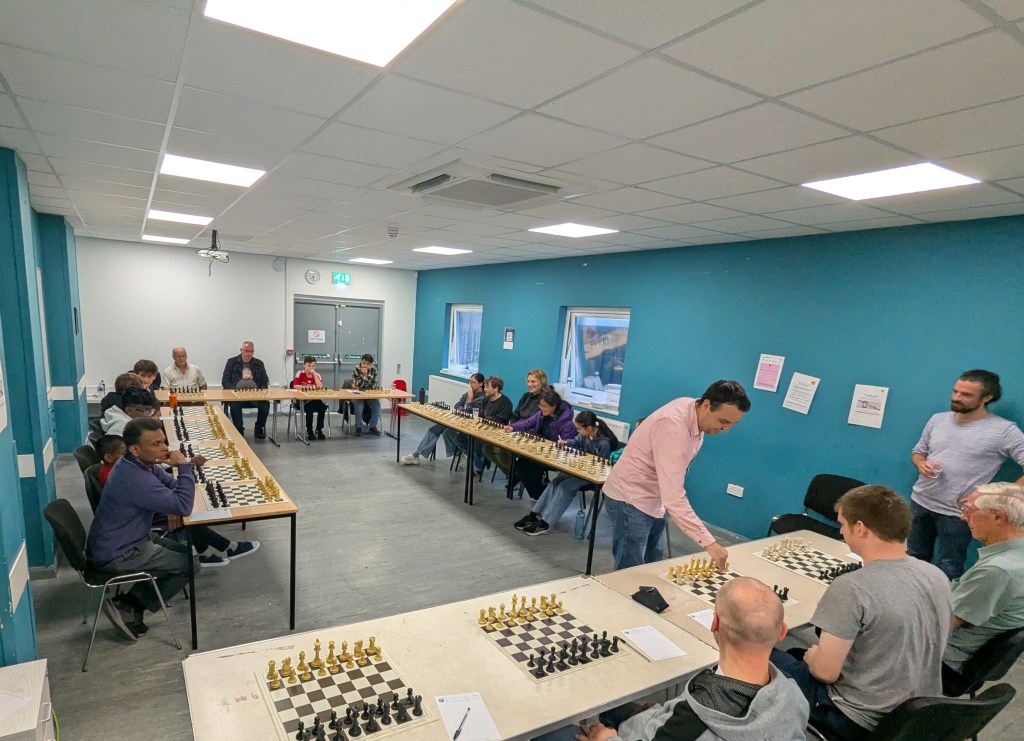
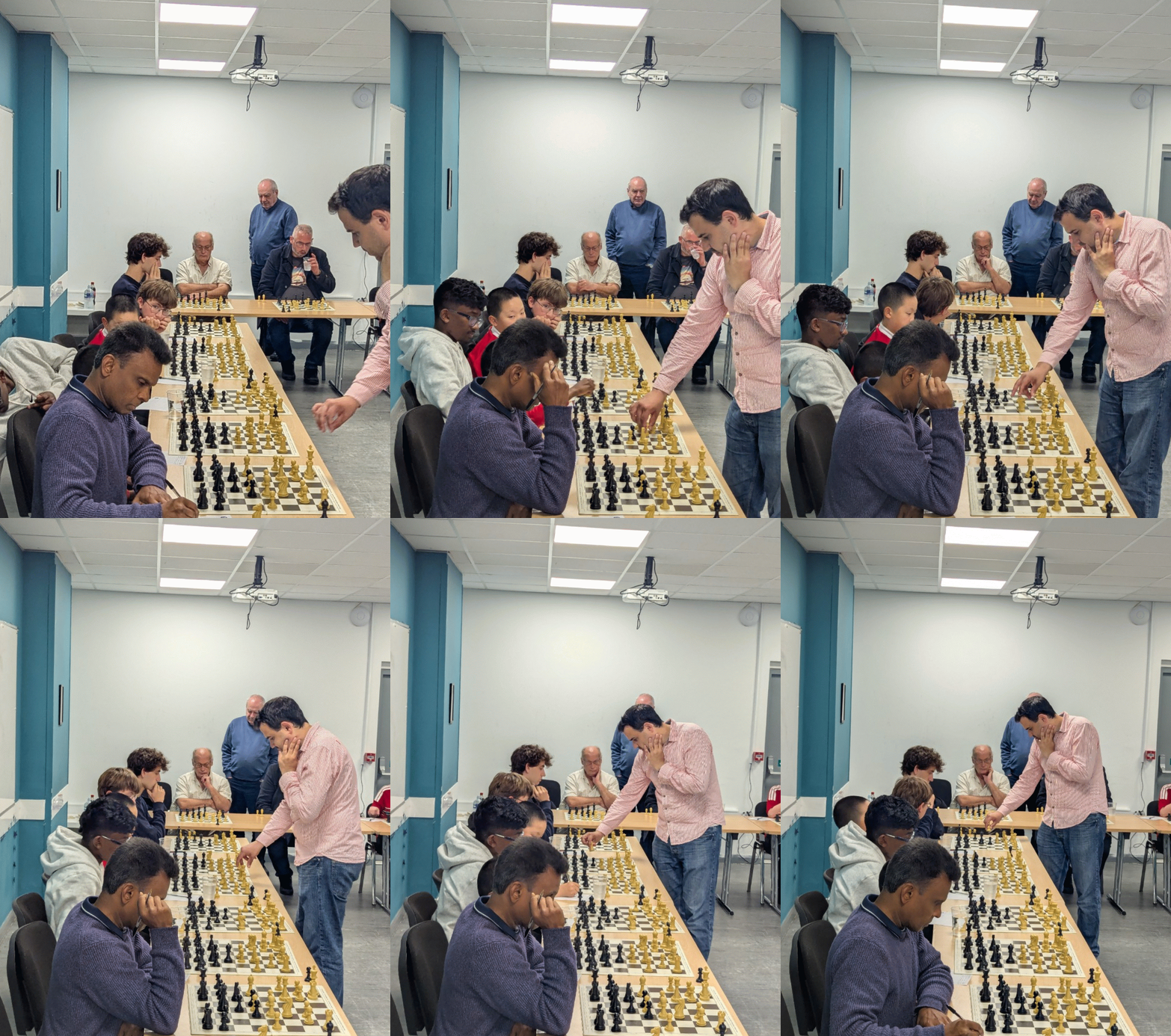
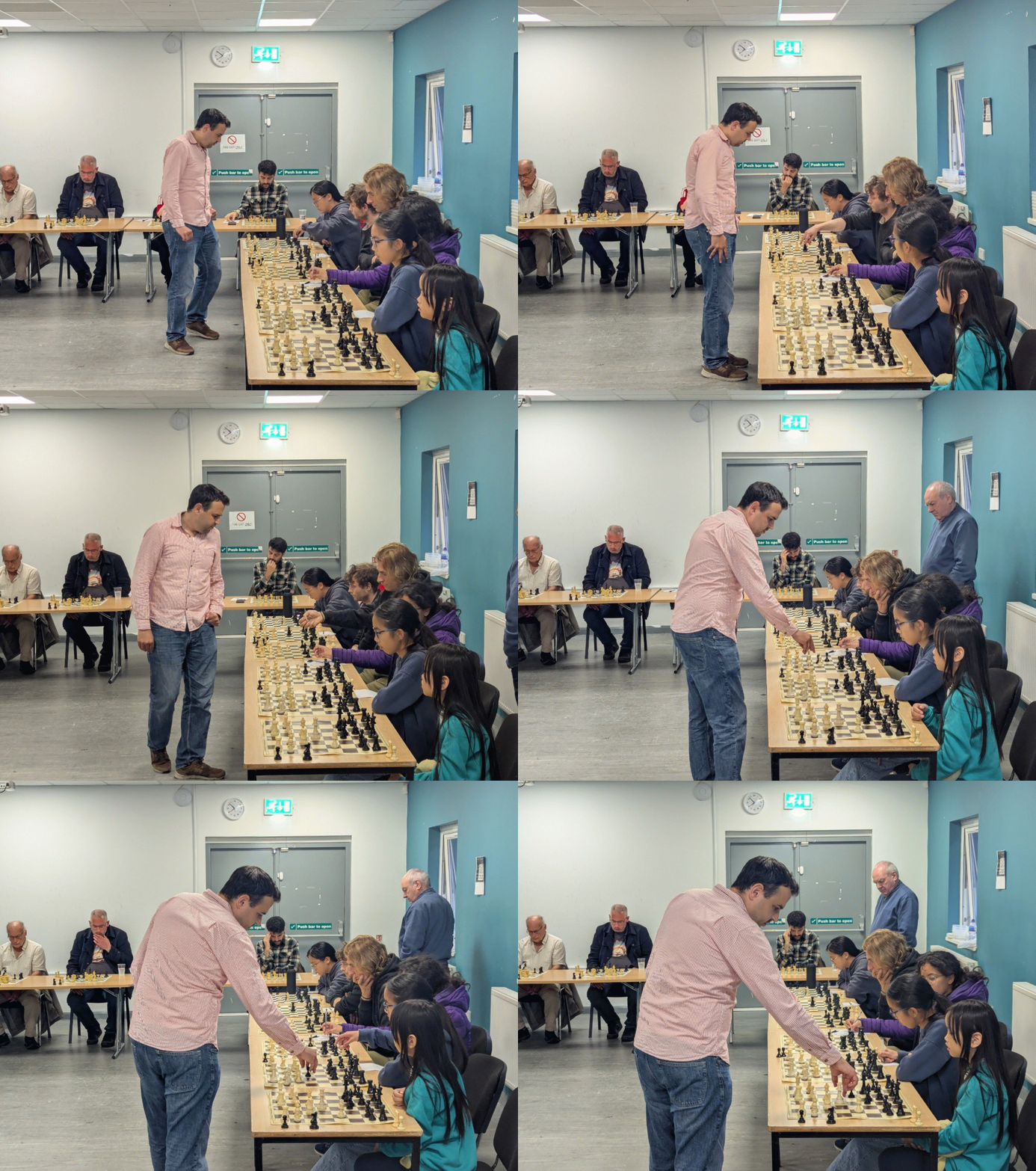
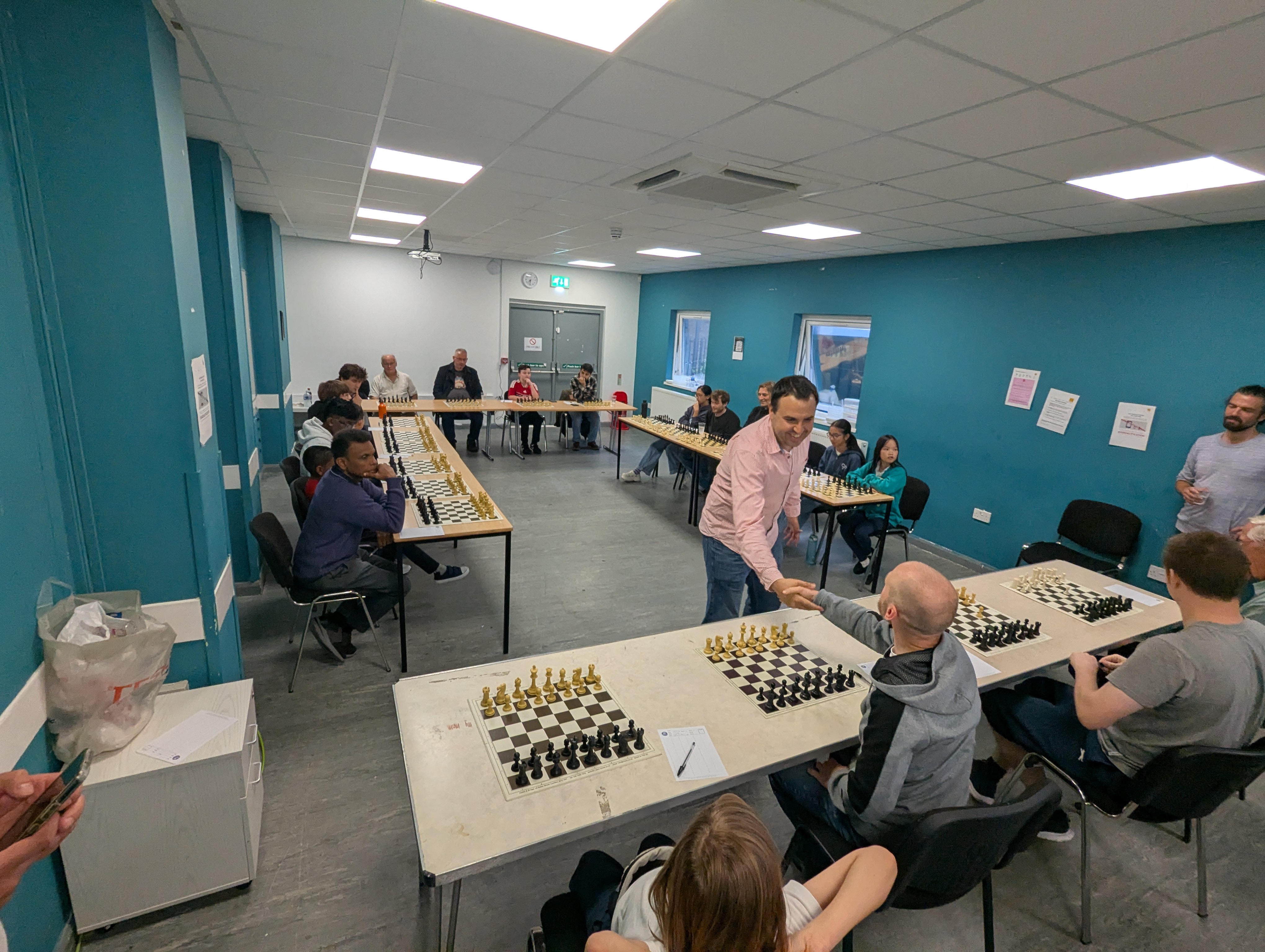
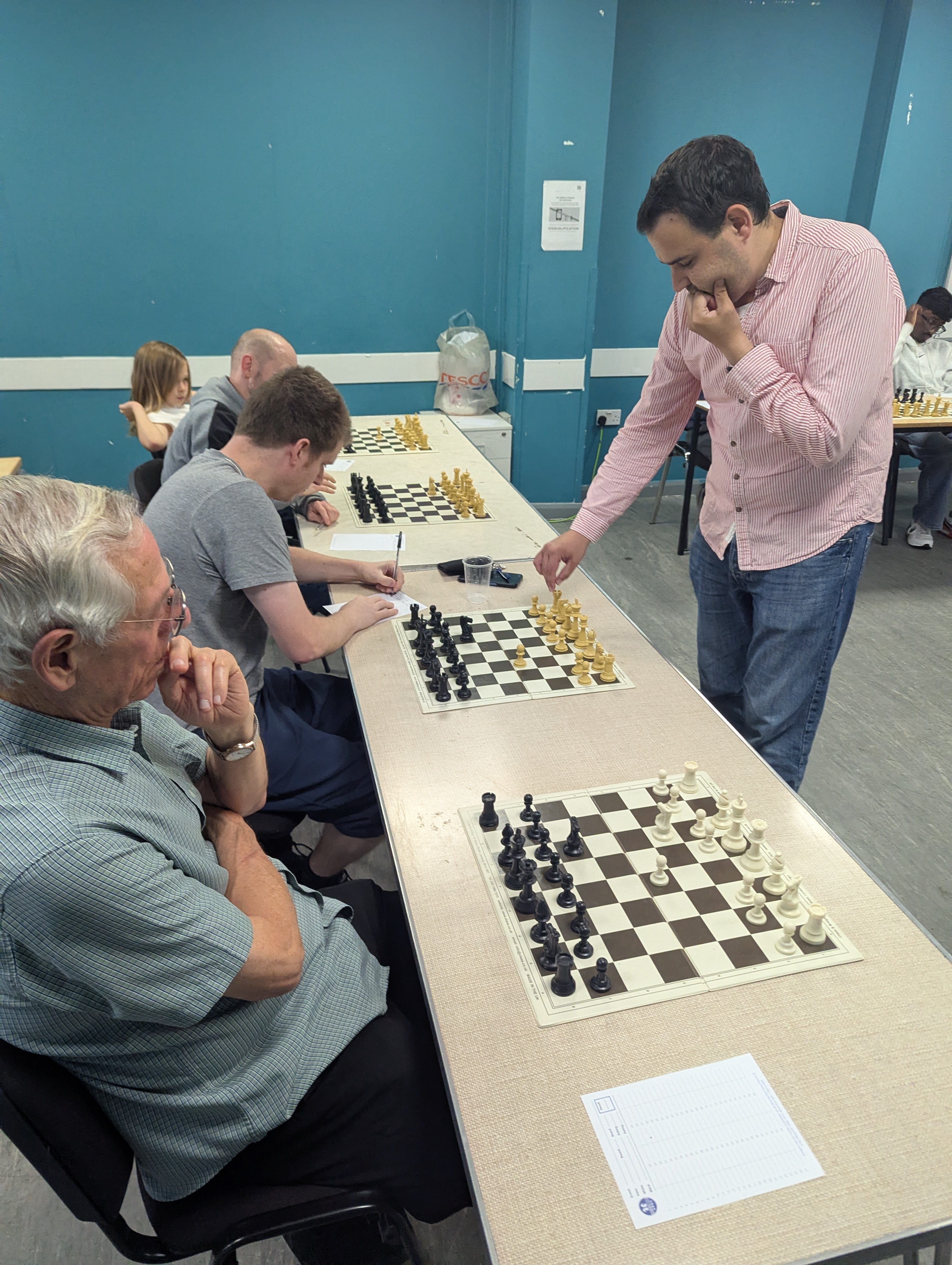
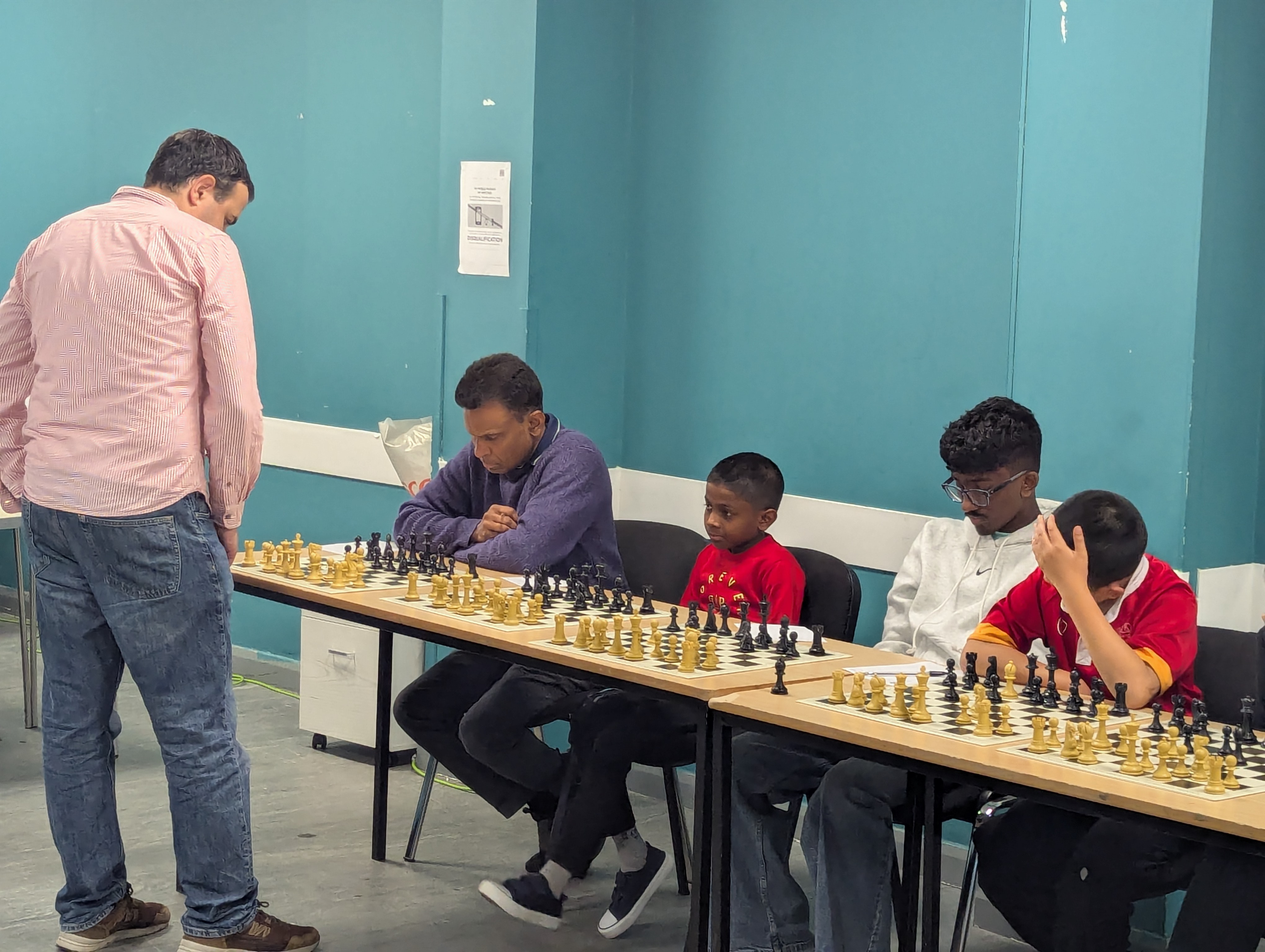
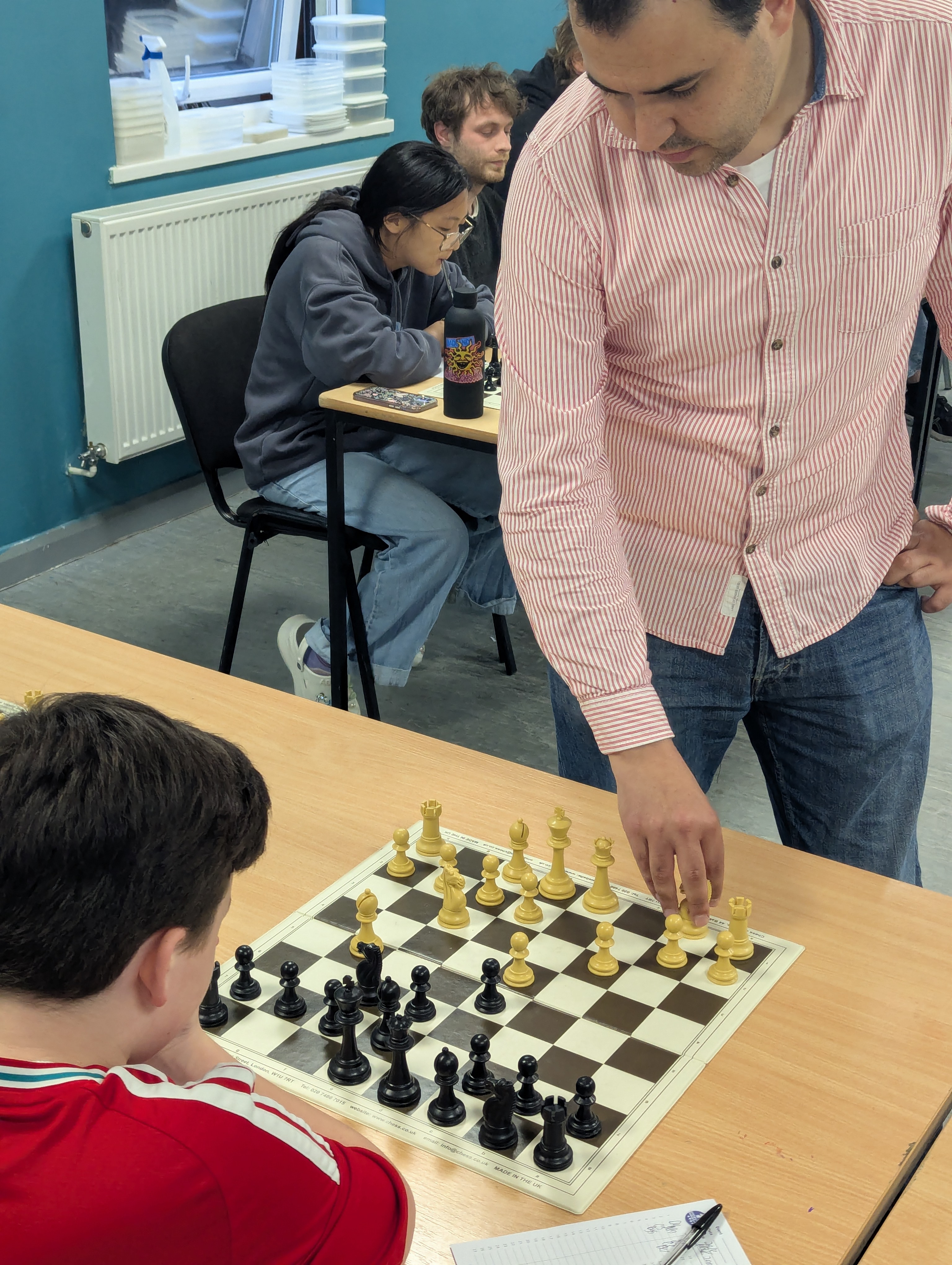
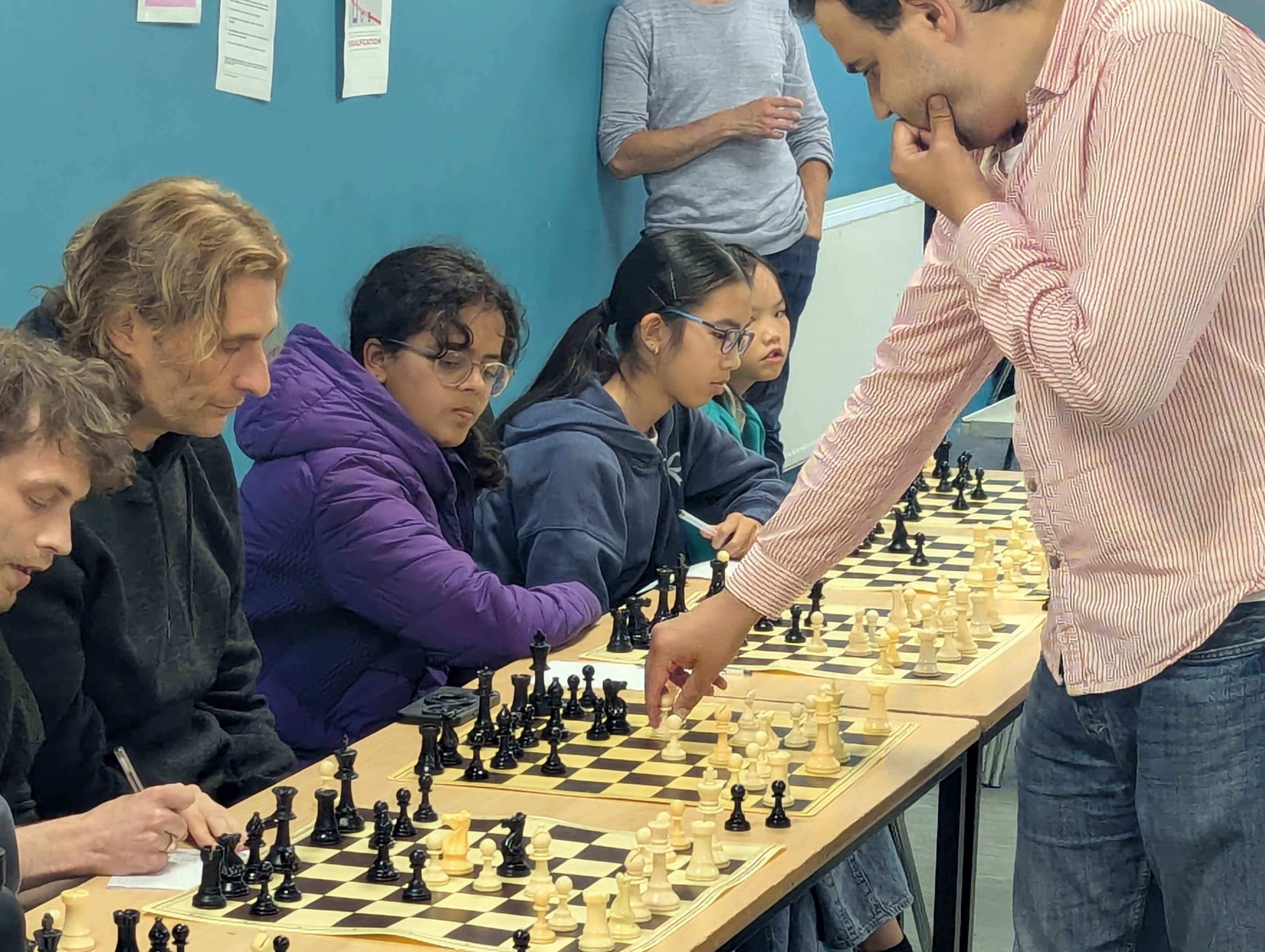
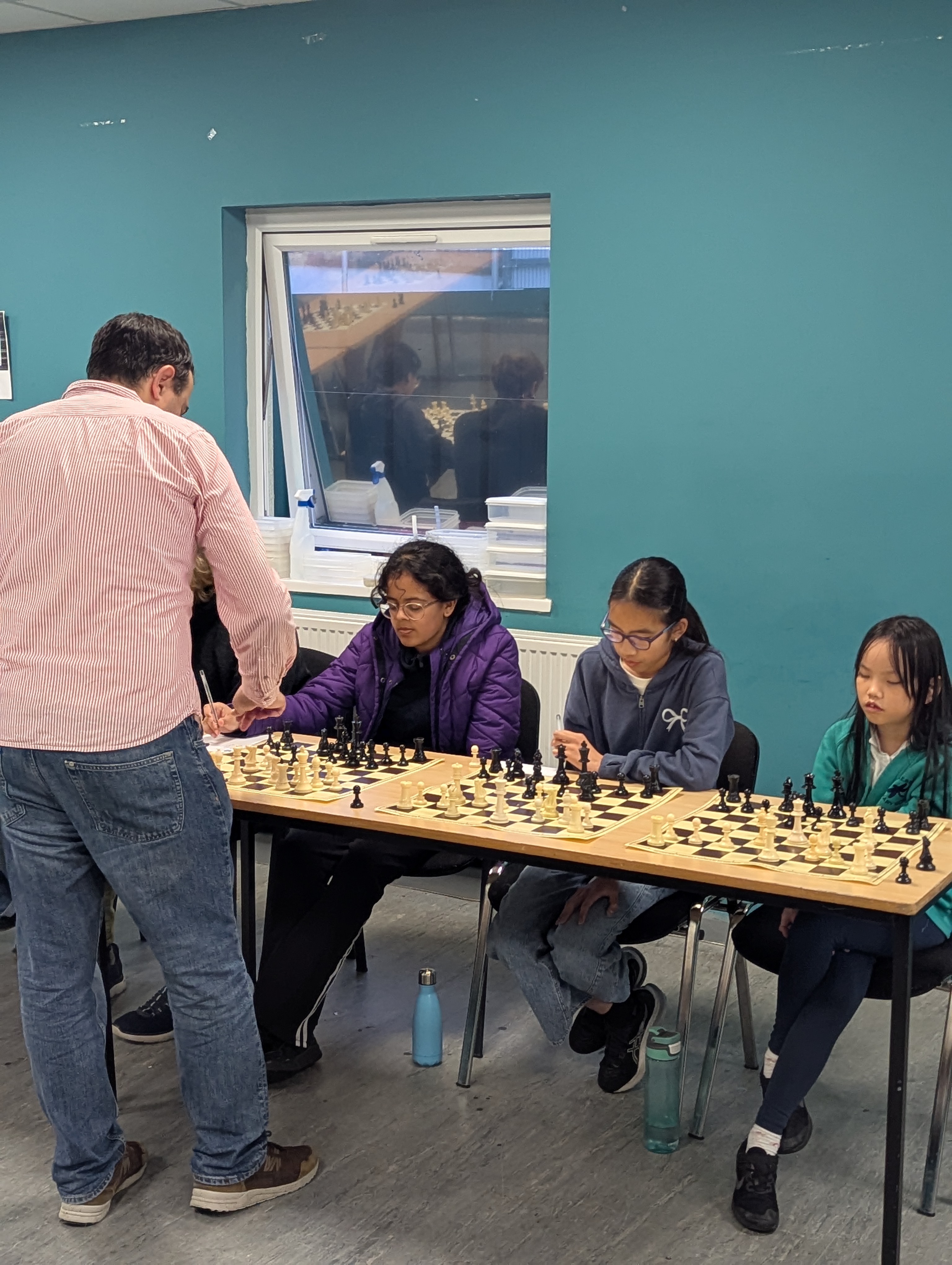
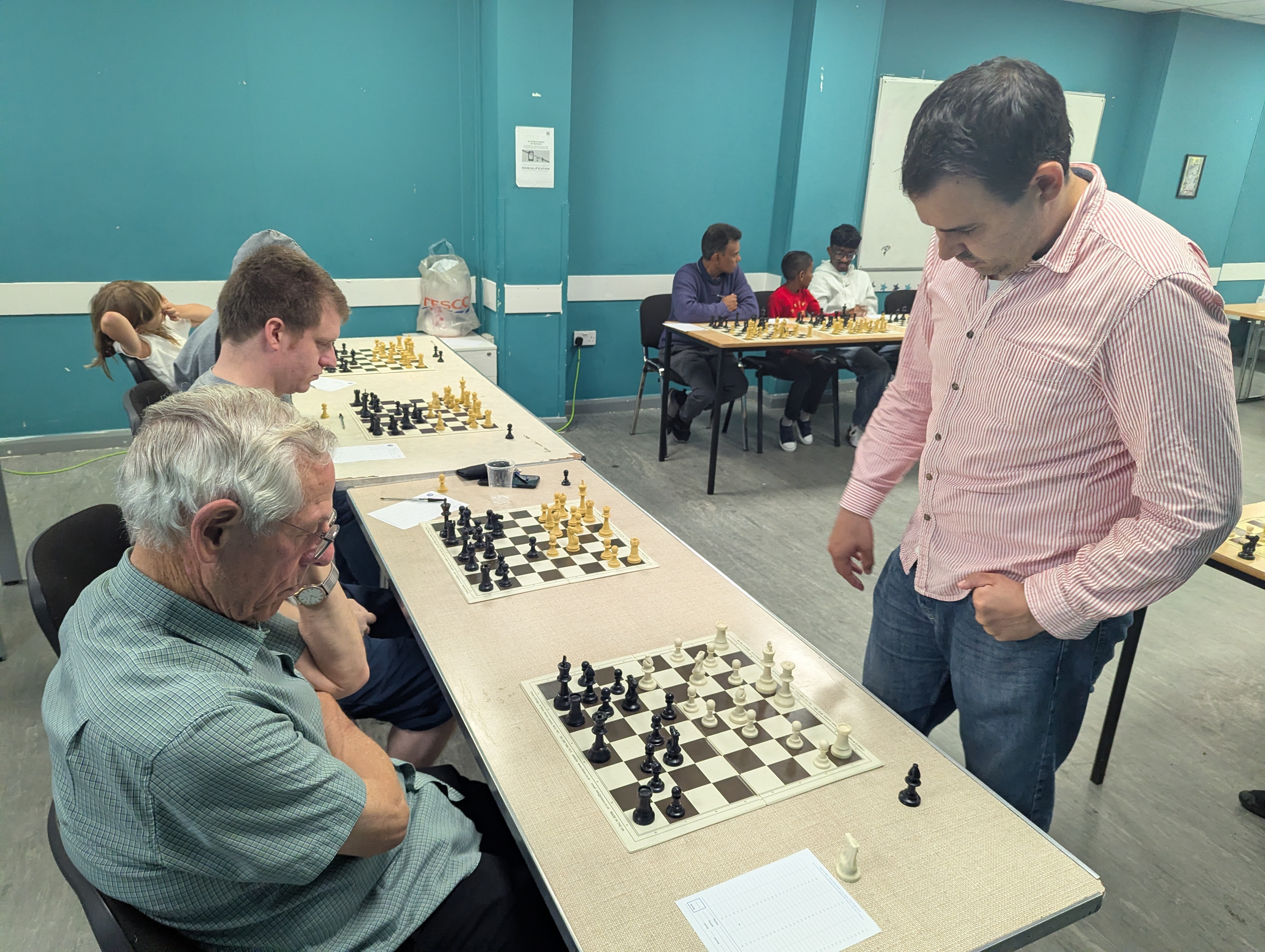
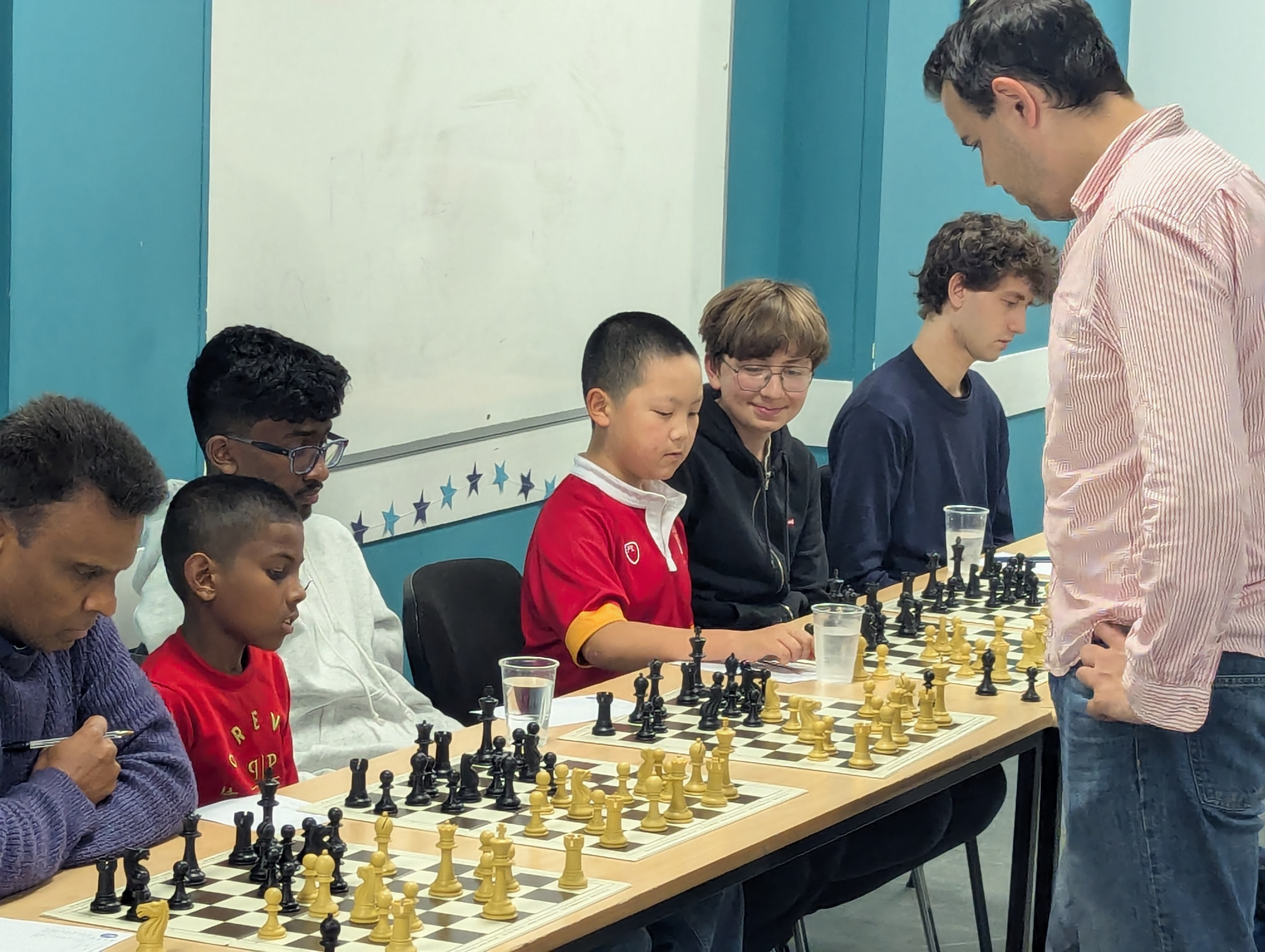
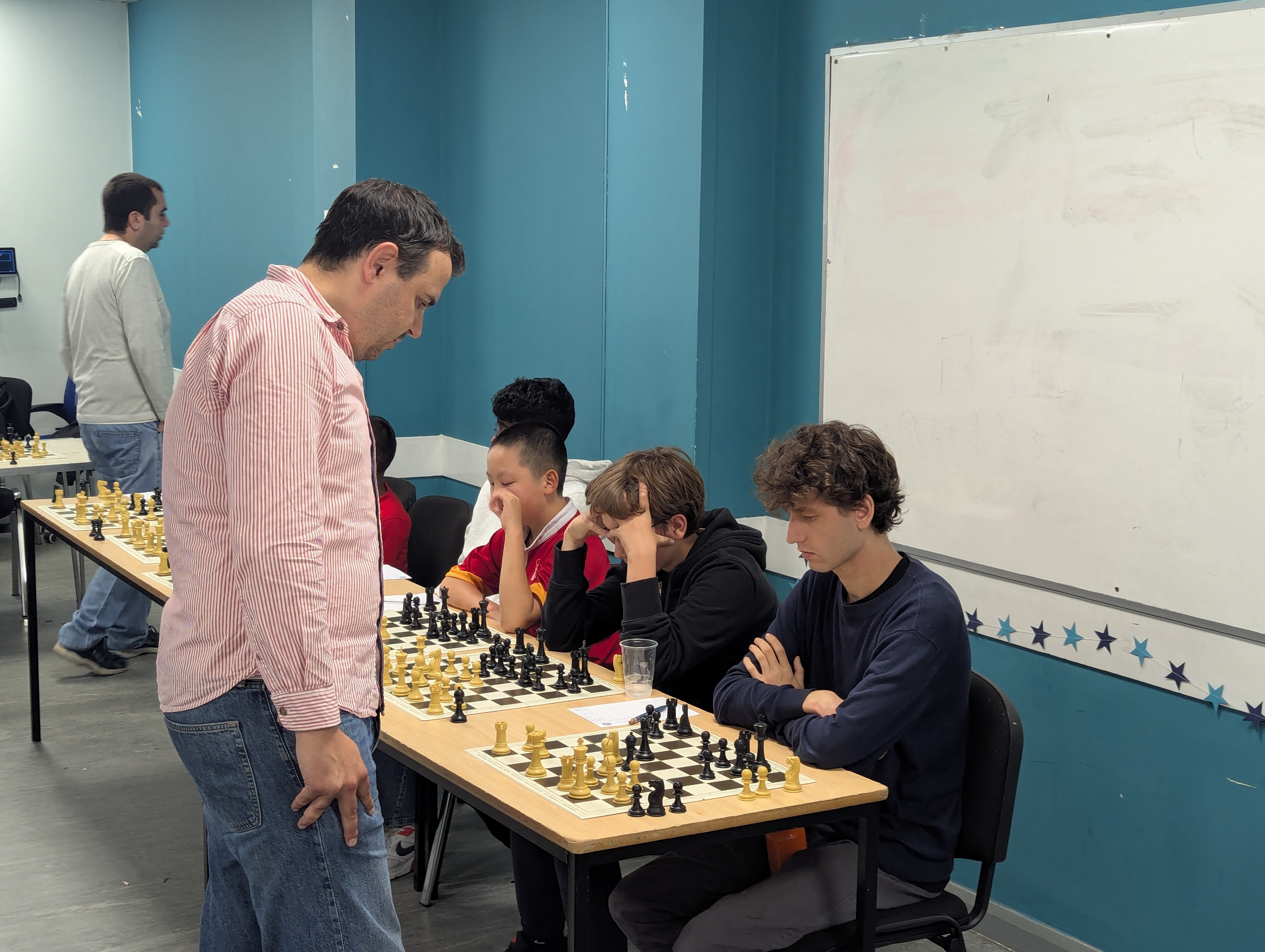
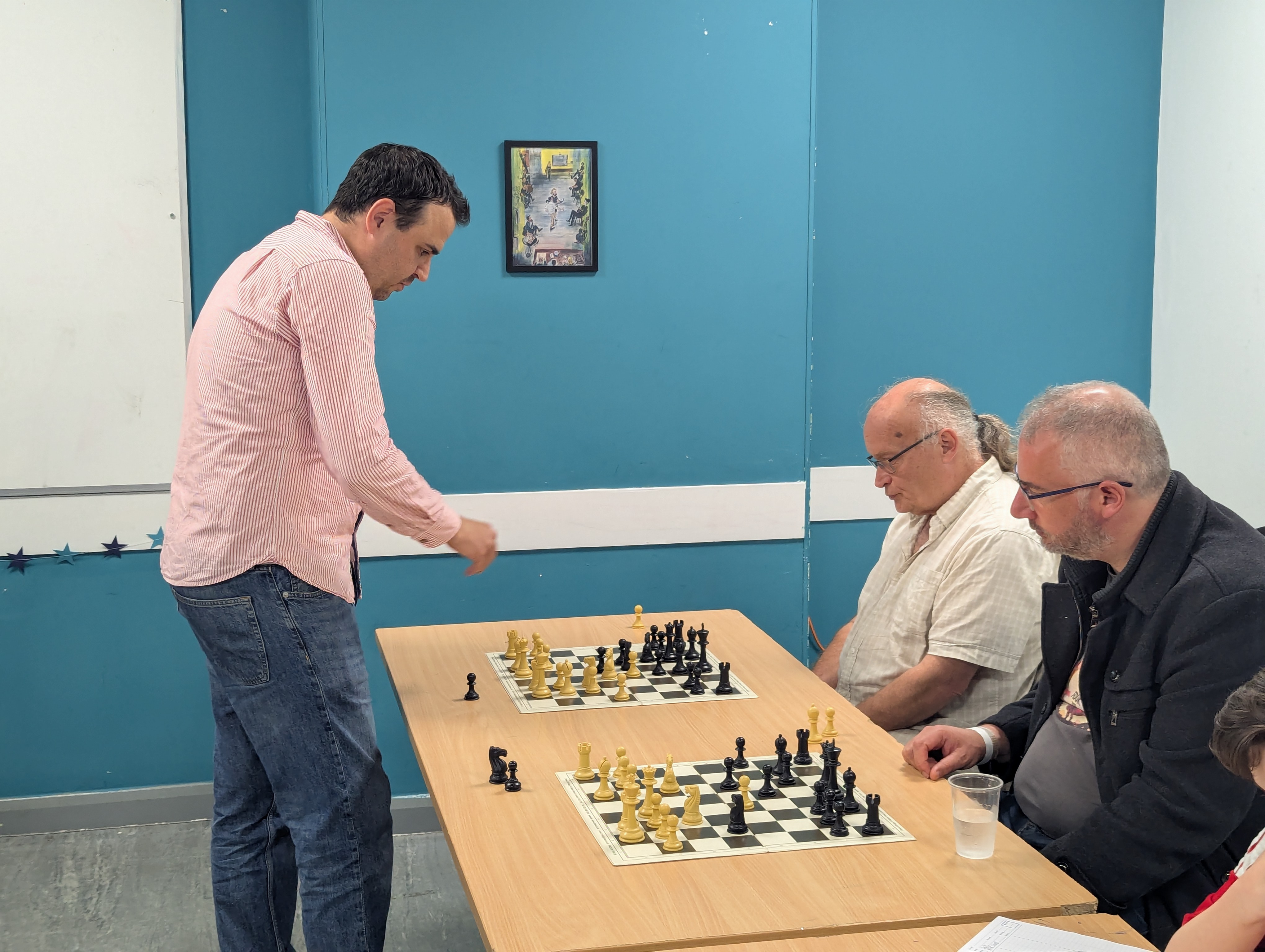
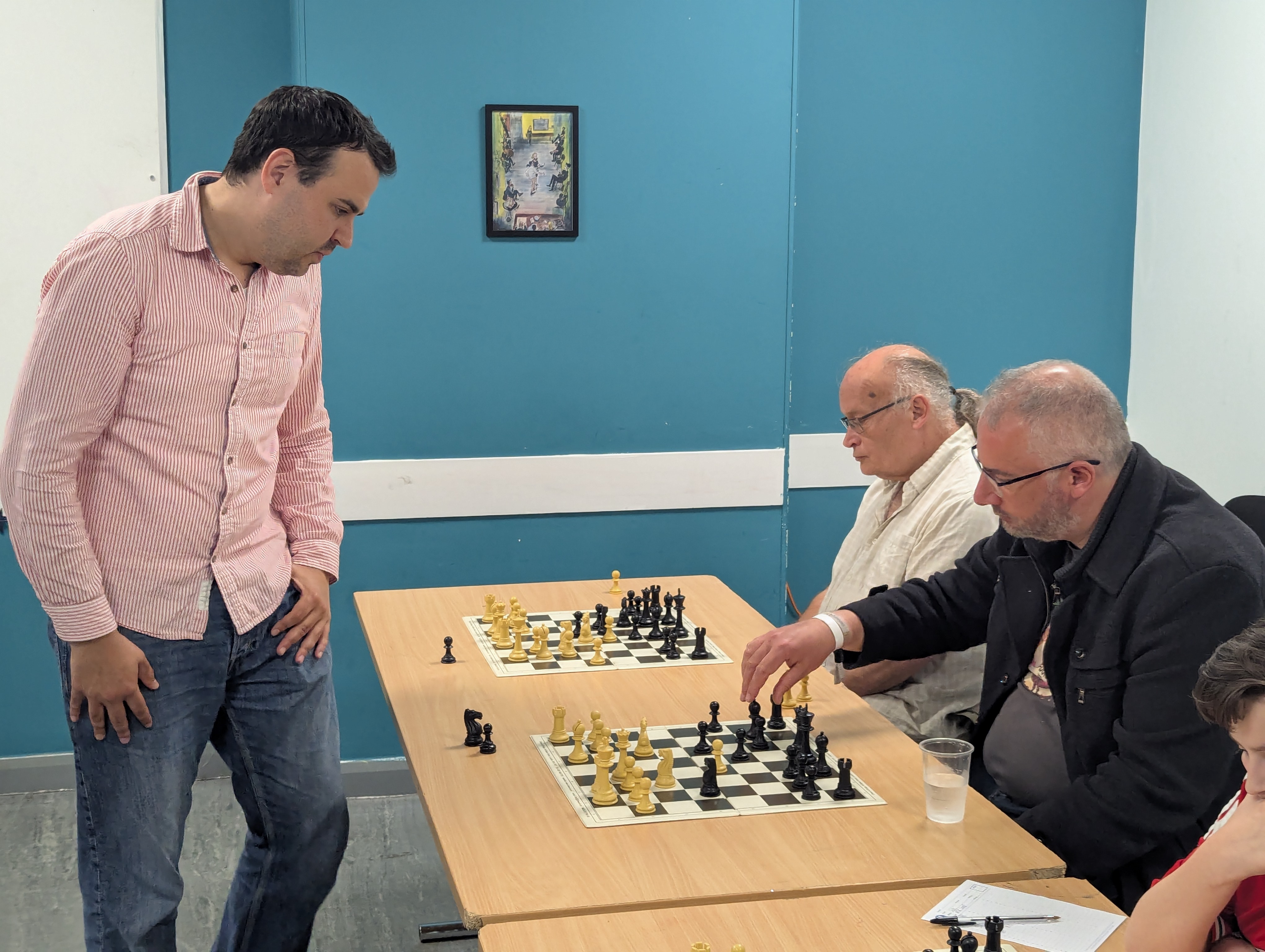
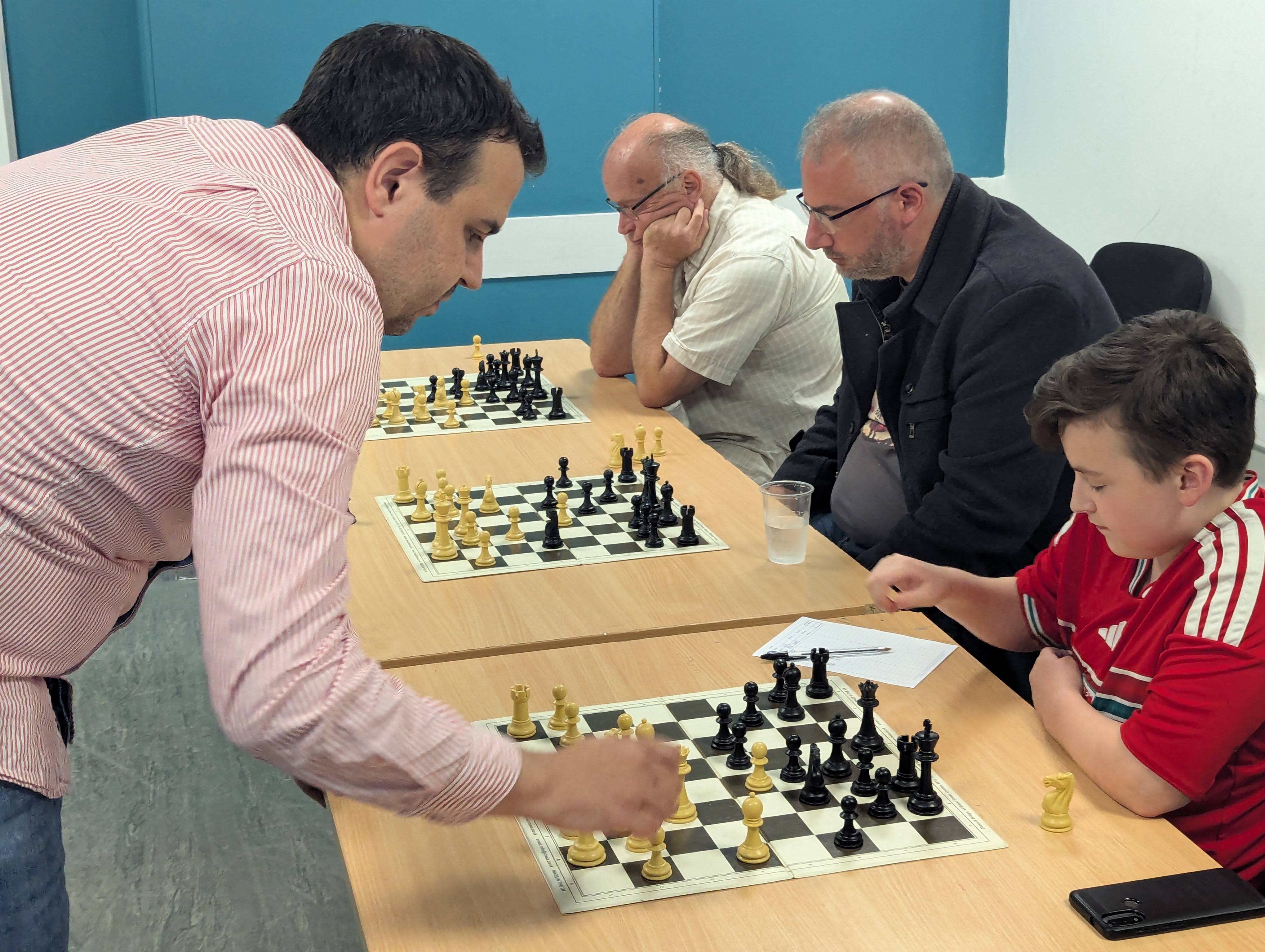
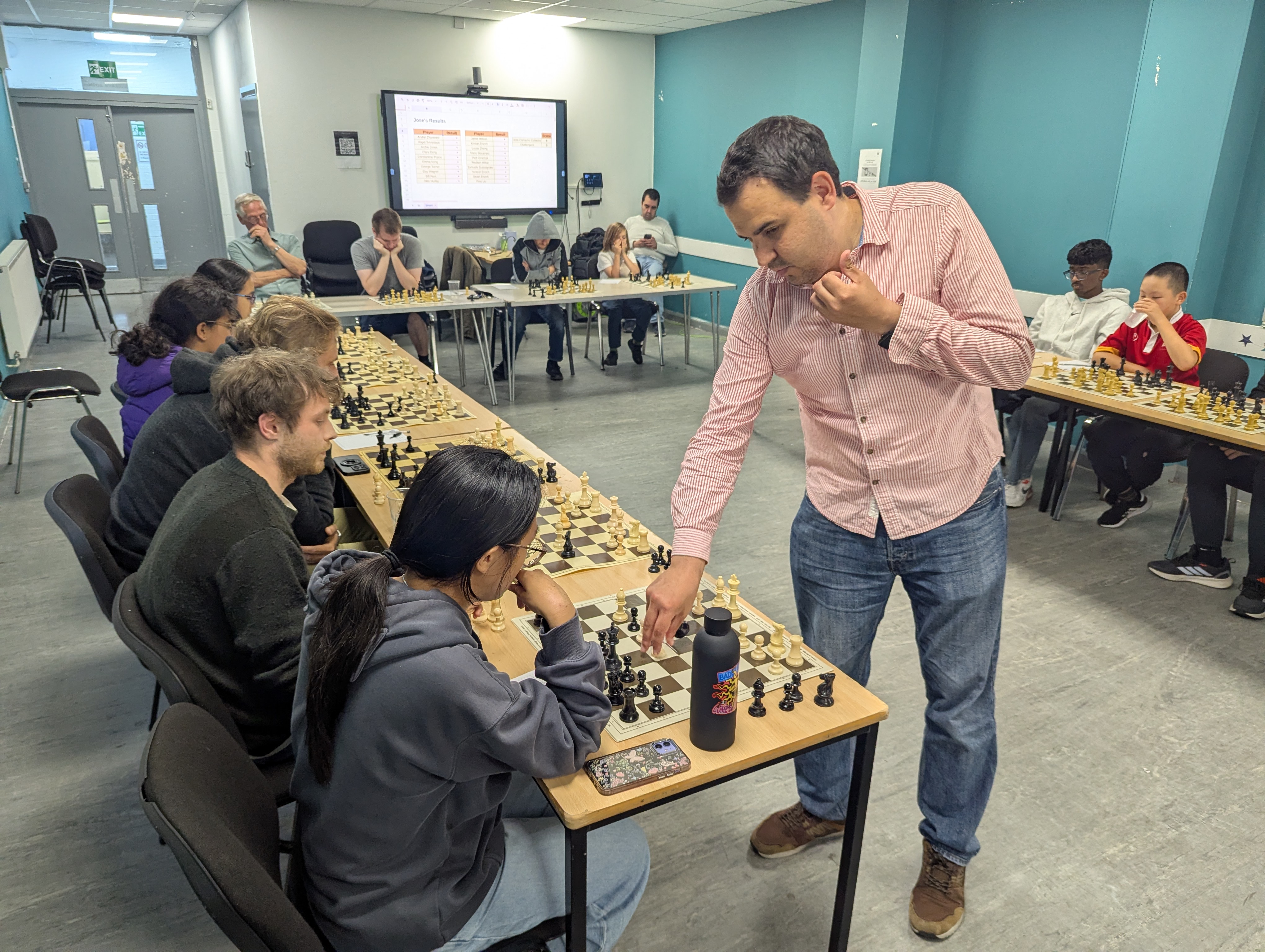
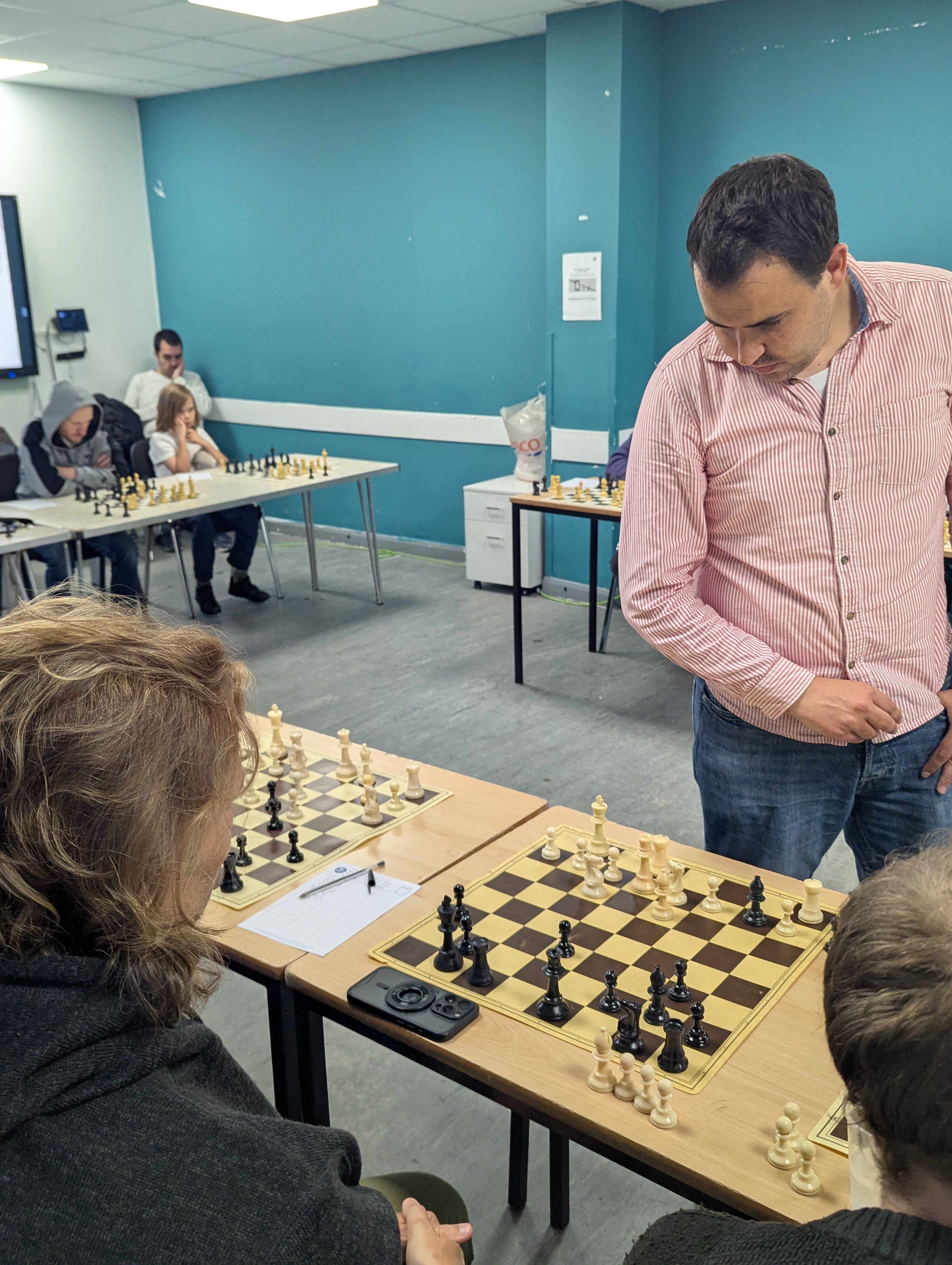
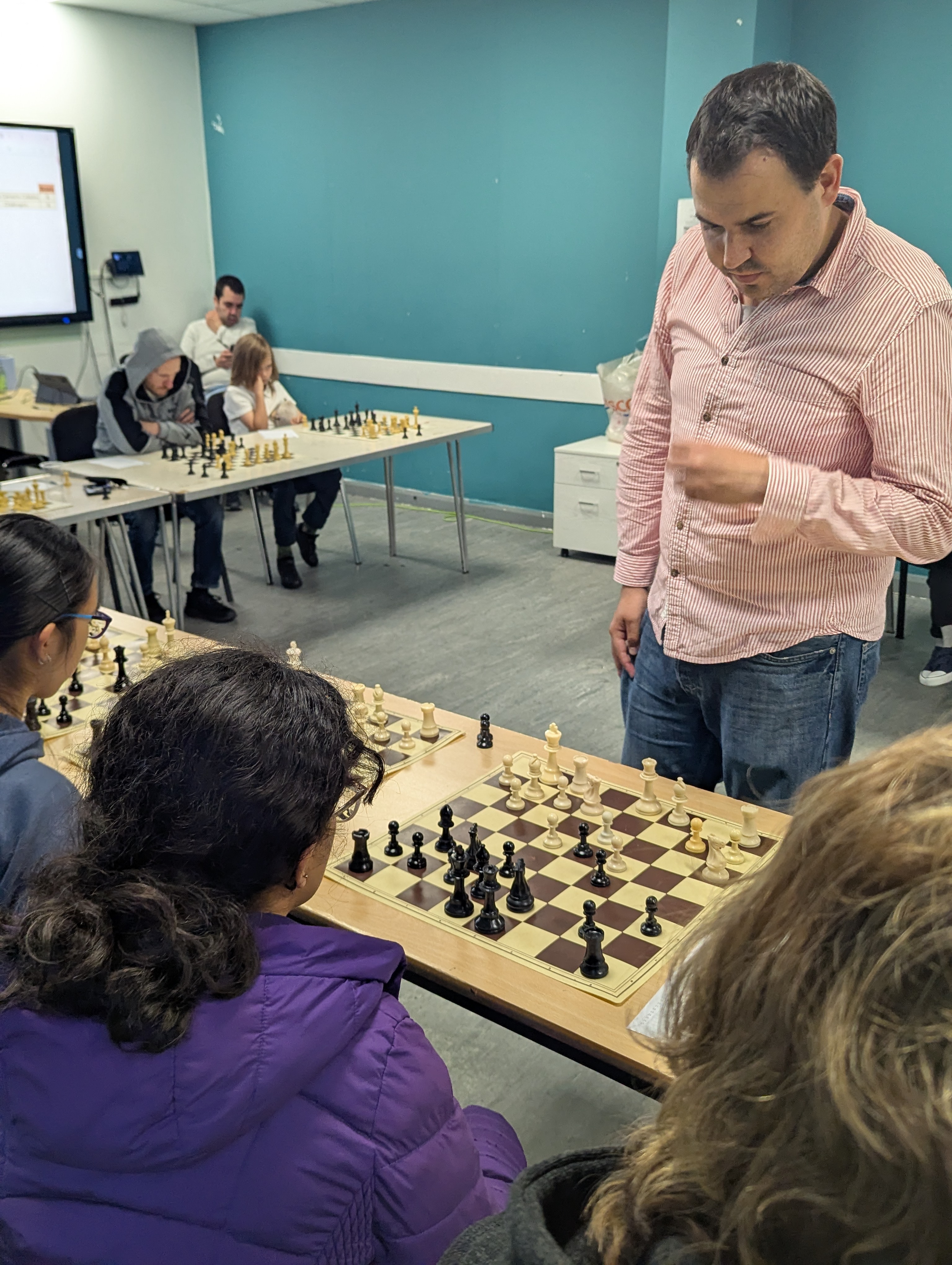
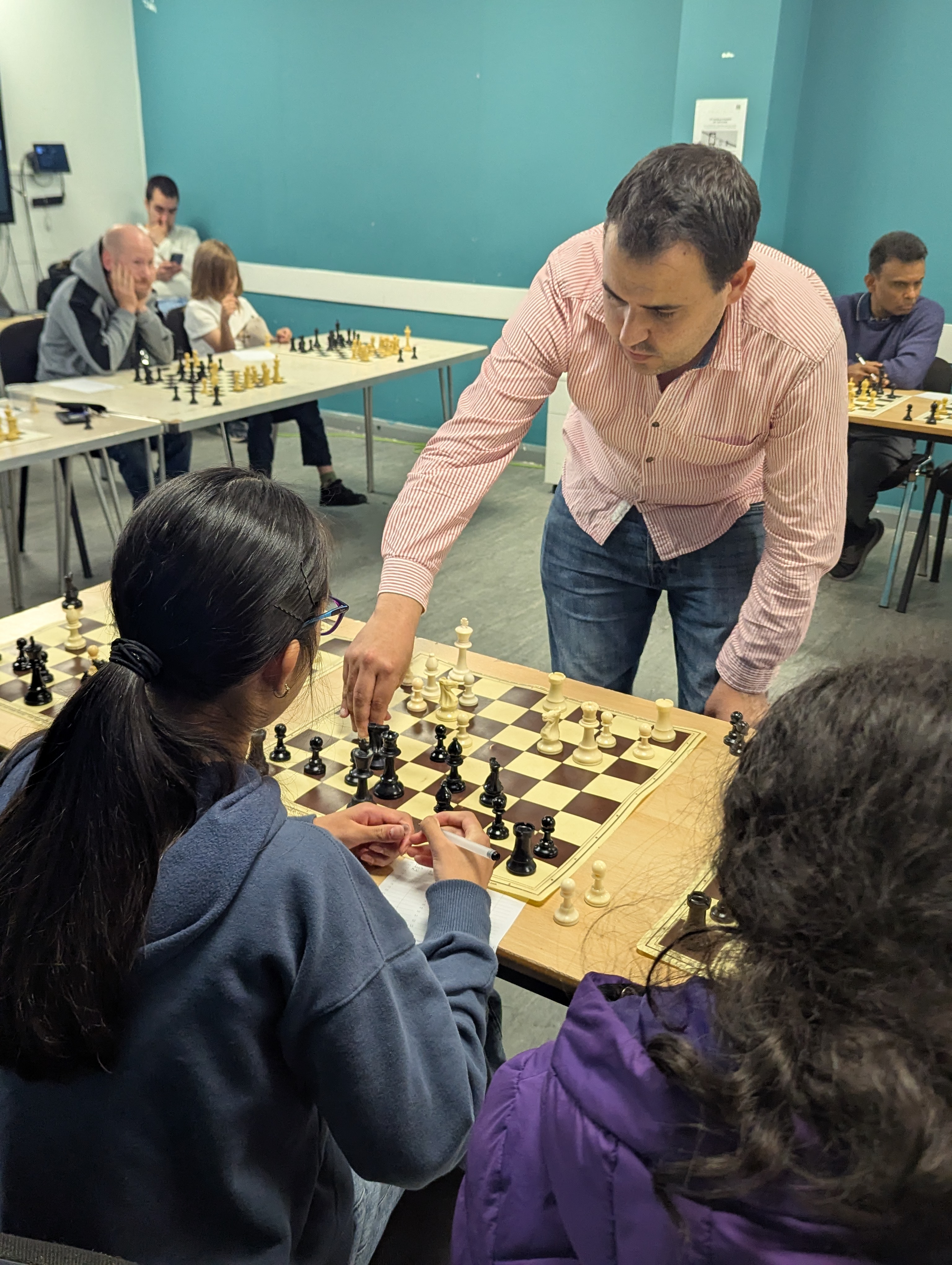
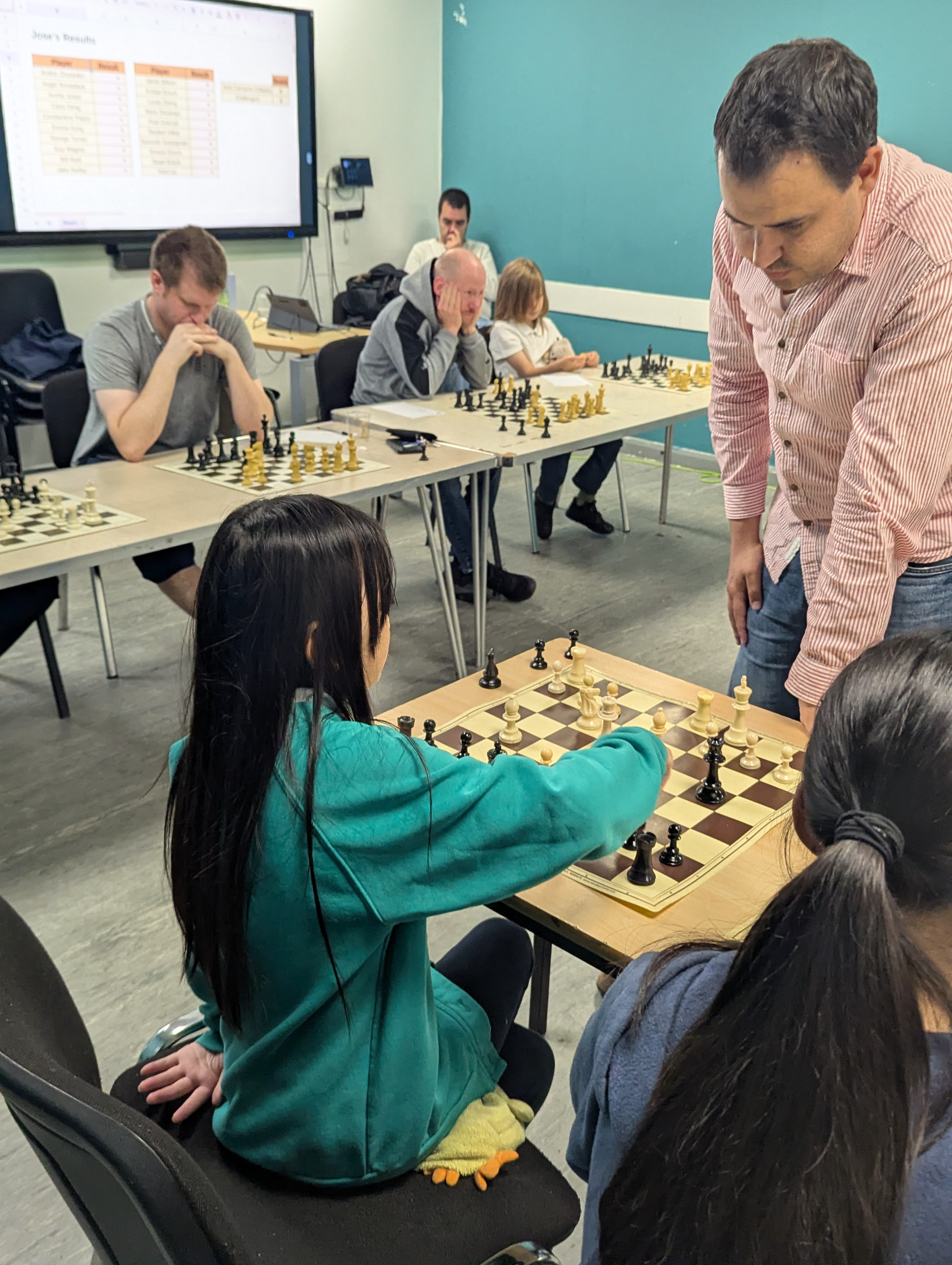
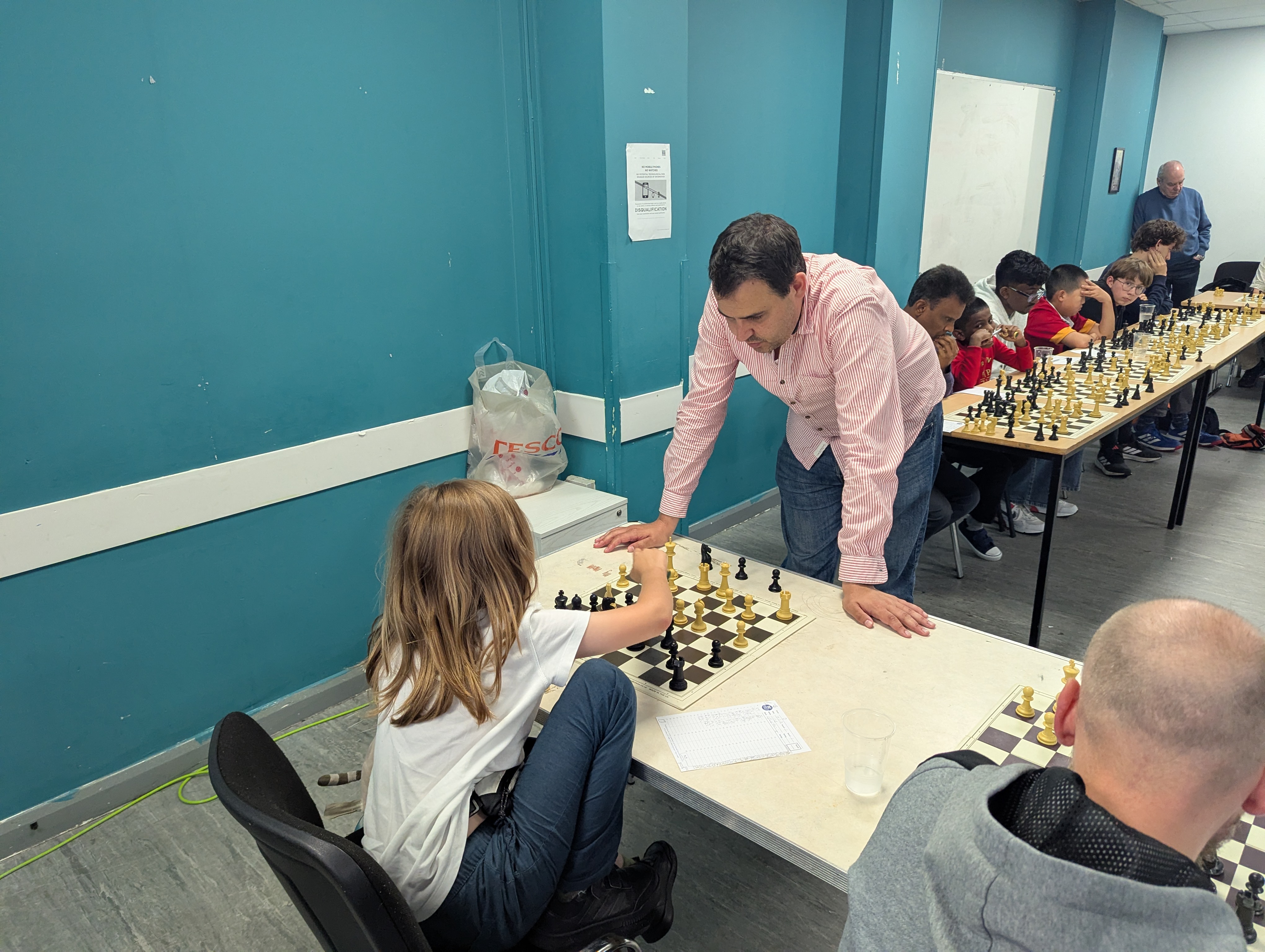
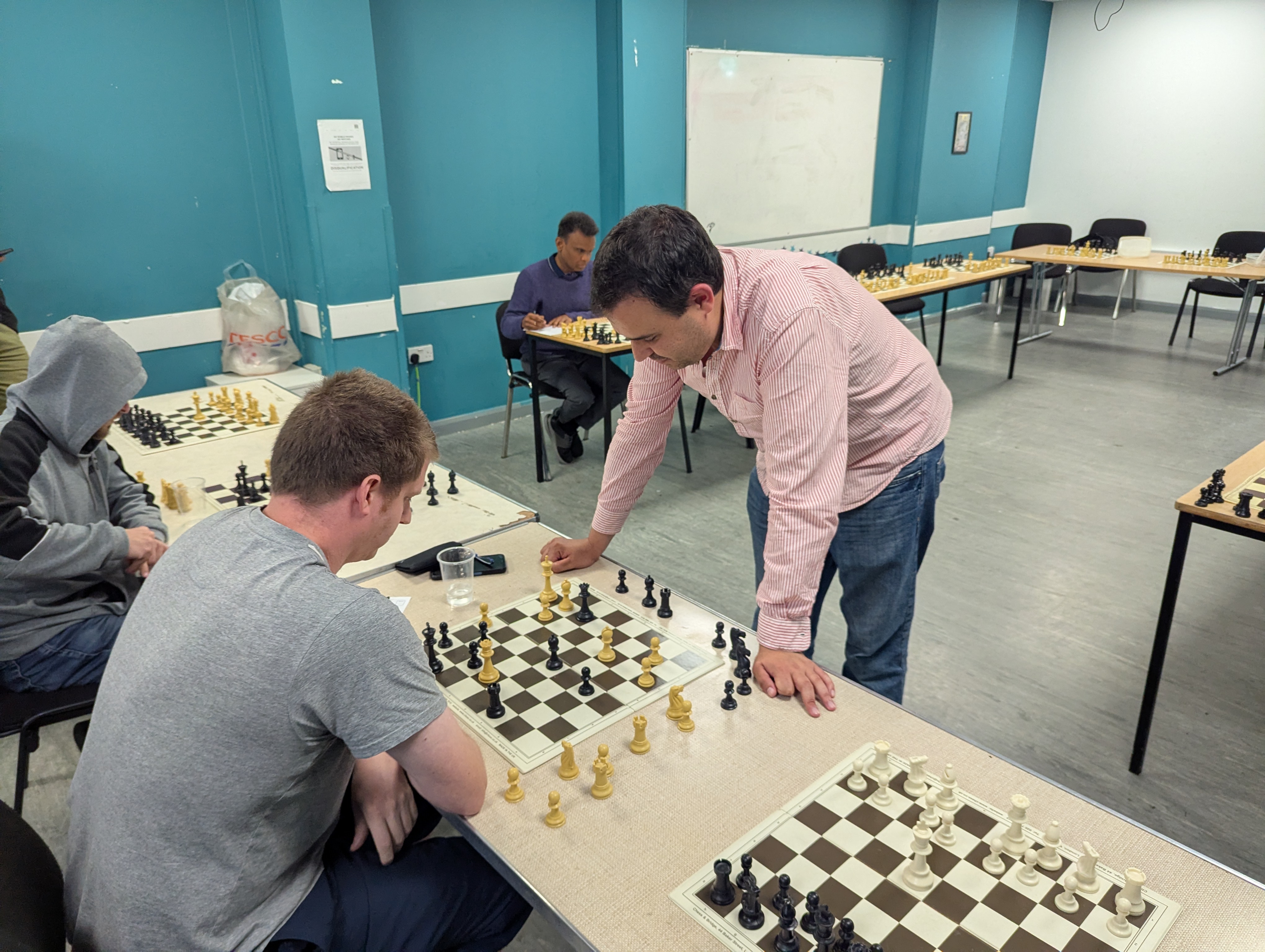
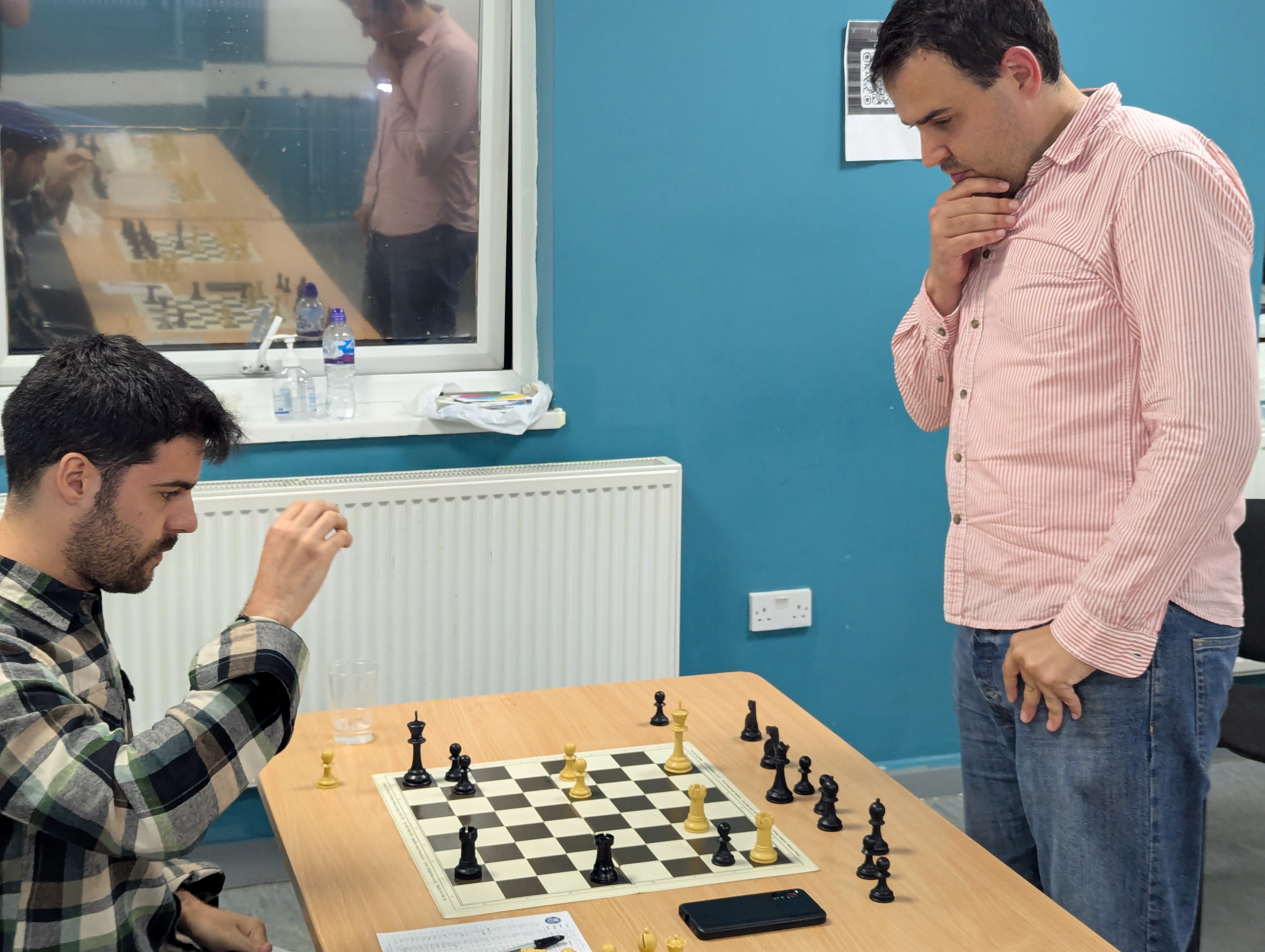
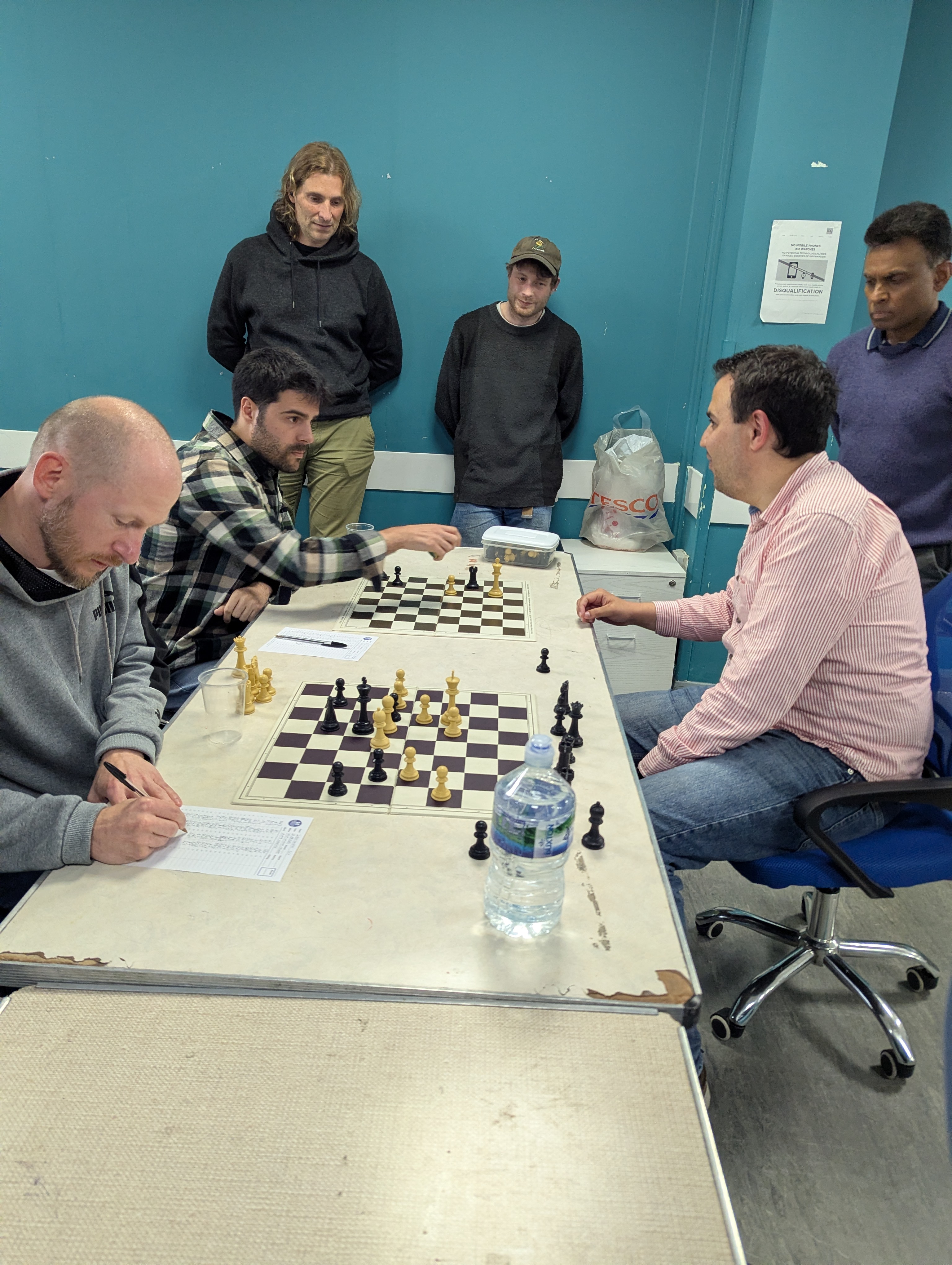
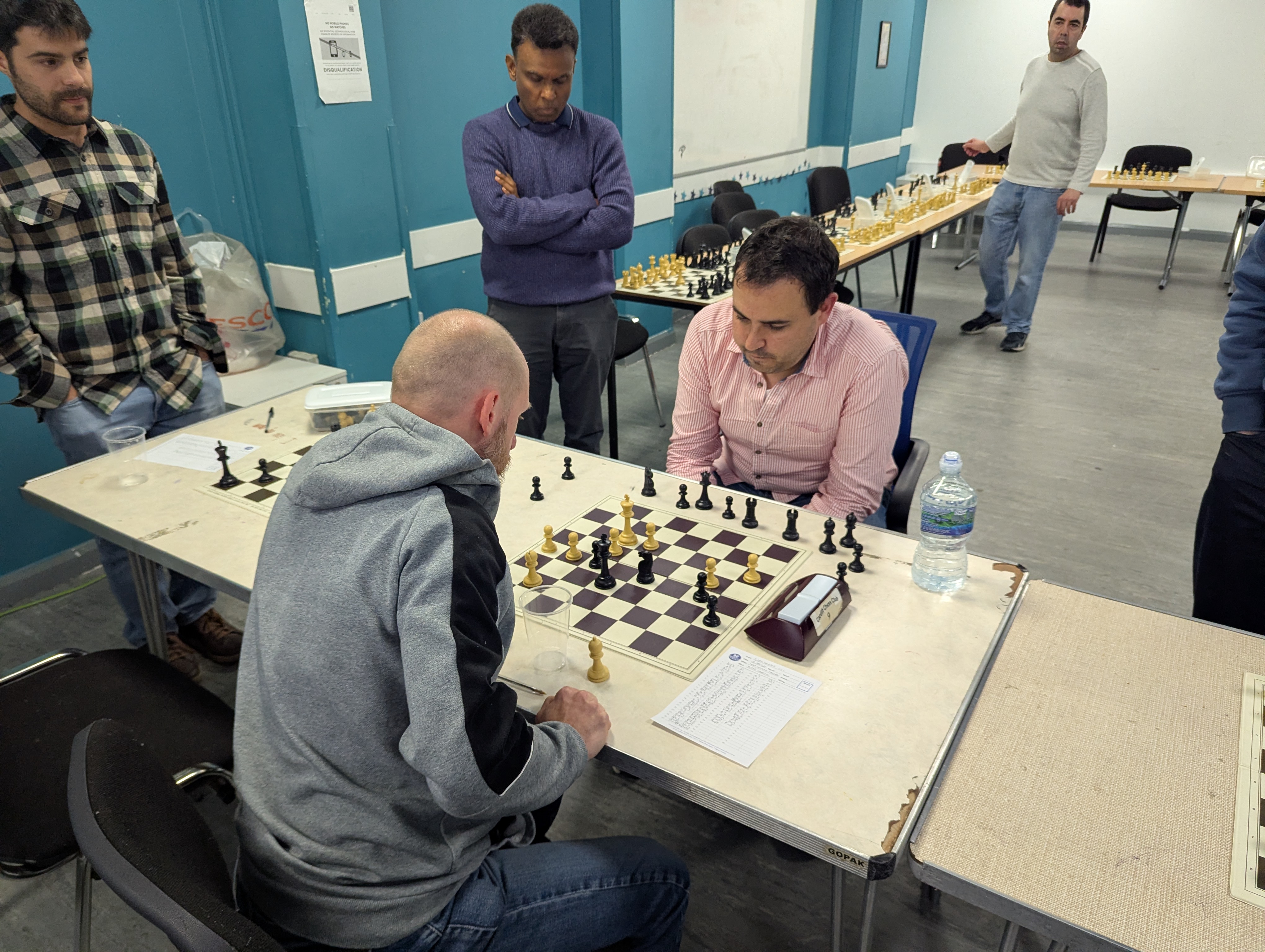
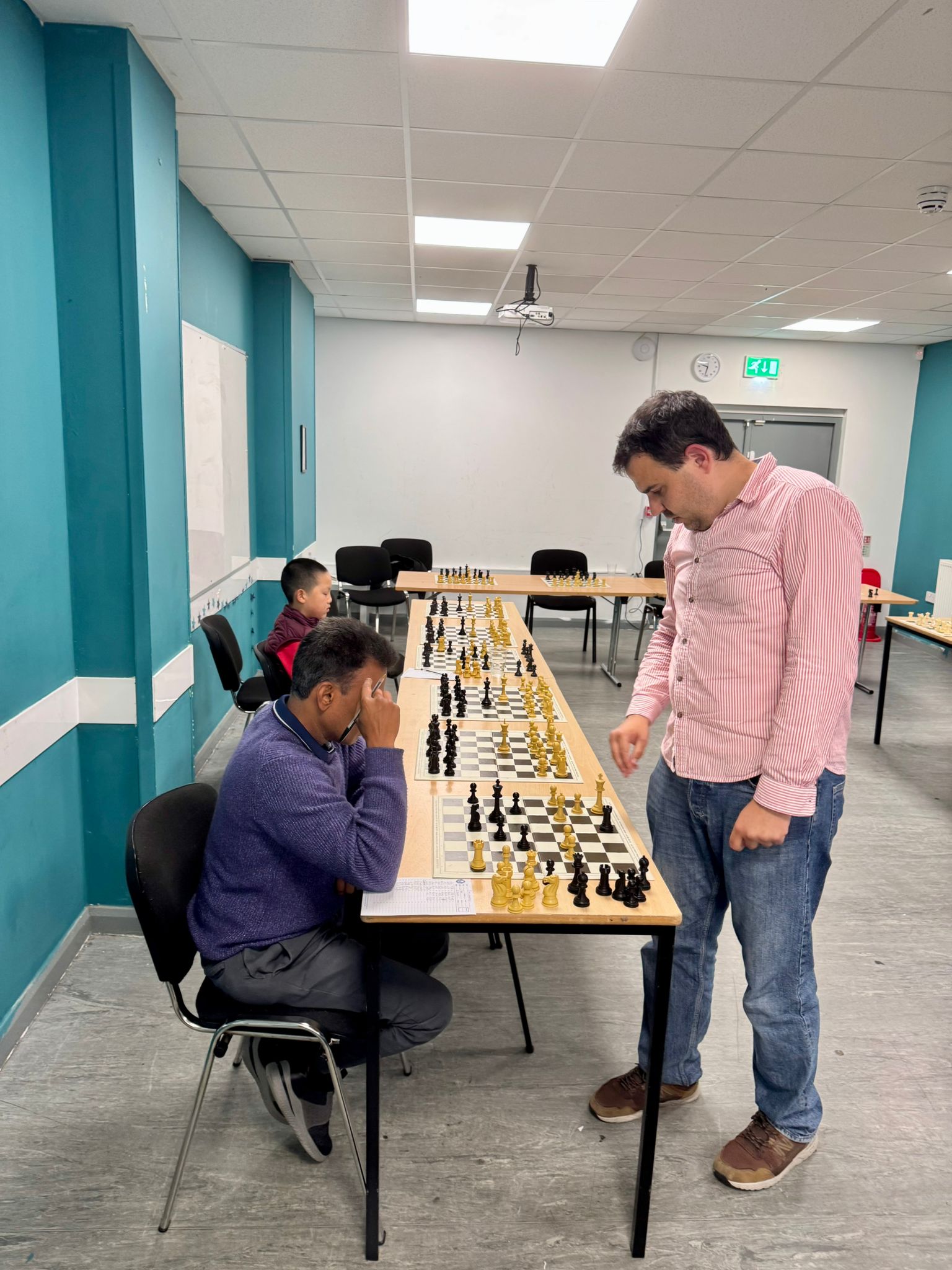
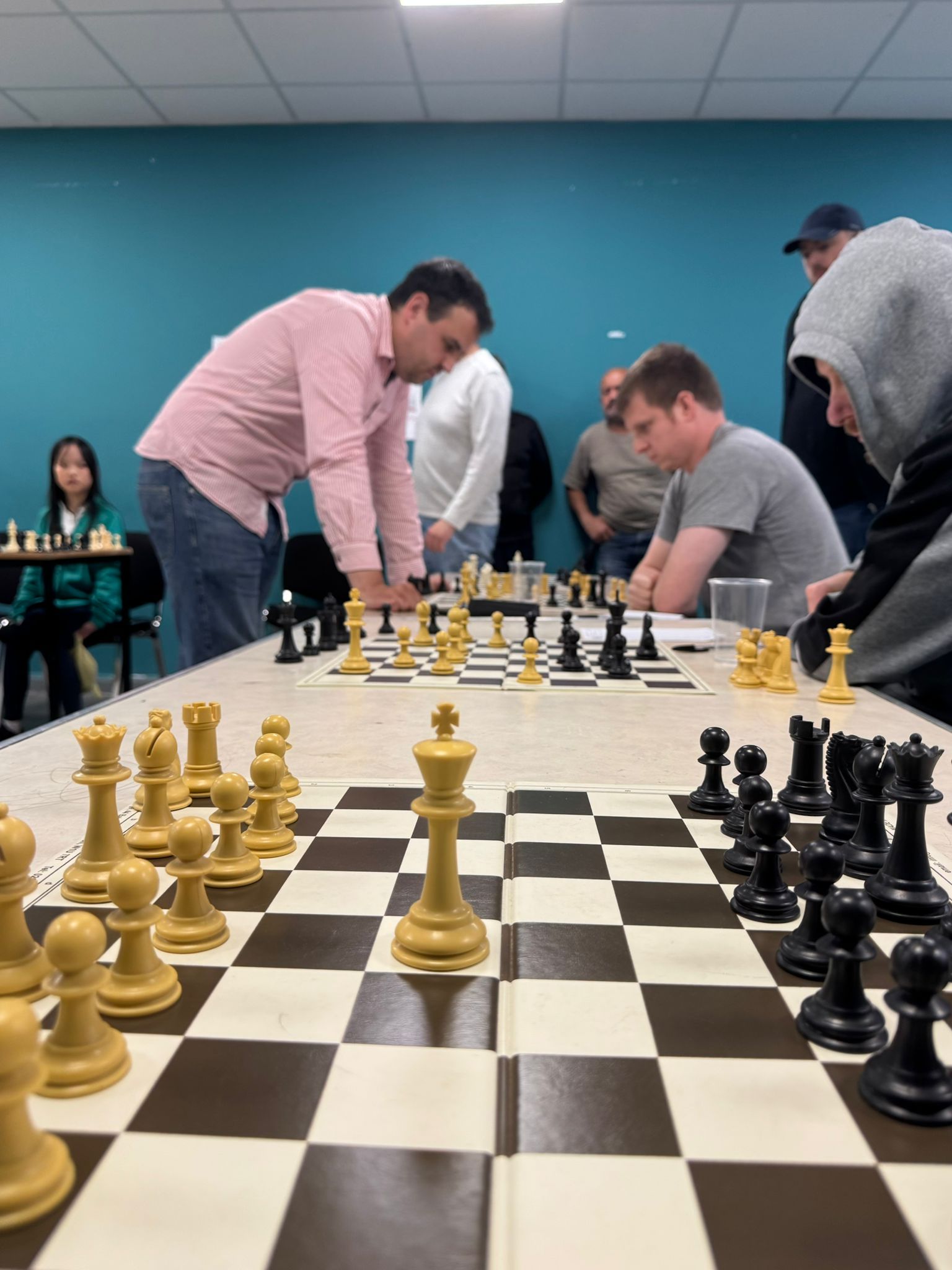
International master Jose Camacho Collados playing Cardiff Chess Club
Images at the bottom of the page
For the third year in a row, IM Jose Camacho Collados gave a simultaneous exhibition at Cardiff Chess Club. Jose is the highest-rated player in Wales (both FIDE and WCU ratings) and is the current Welsh Chess Champion.
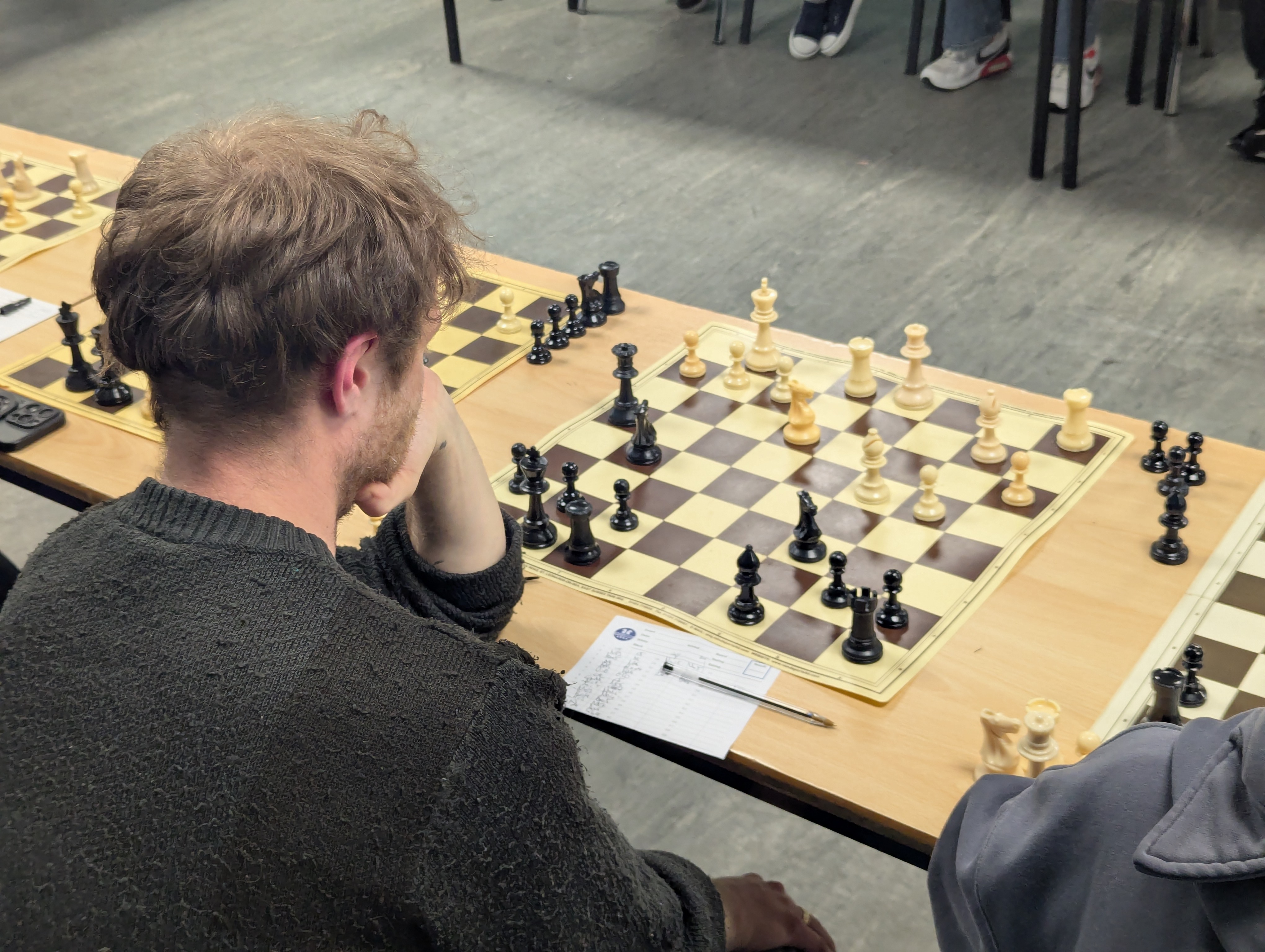
This year we had 20 eager challengers rated below 2000, ready to face him. Like last year, the players ranged from fairly new players to experienced veterans who play in the league’s top division.
Due to some time constraints last year, we decided to lower the total number of challengers from 23 in each of the last two years to 20 this year. The average Elo of the challengers was also slightly lower than before; however, this could be a suspect stat, as this year we had a lot more kids participating, and we all know how scary they can be regardless of rating!
As the games got started, Jose breezed through the first few cycles before being abruptly stopped by an unexpected gambit, which I found amusing… Like last year, it seemed everyone was putting up a good fight, as we had no finished games after the first hour!
However, after the hour mark, results started coming in, all wins for Jose. I wandered around periodically to see how everyone was doing. There were a lot of winning positions for Jose and some unclear fights. I found Emma’s game particularly interesting. It looked like her King was getting dragged out and mated, but as hard as I looked, I couldn’t see the mate. If she wriggled out of the mating net, she could very well be winning.
Still, I was beginning to think the way things were going that Jose might actually get the 20-0. But out of the blue, I saw Jose shake hands with Andrei and announce a draw. I did not see how it happened, but the challengers were finally up on the board!
A few more losses followed before Archie quietly approached me, asking if I could check a possible threefold repetition. I had a look at his scoresheet and it looked correct. We patiently waited for Jose to come around, where Archie made his move and offered a draw. Jose happily accepted and, just like that, the challengers now had a combined full point.
After some time, only about 6 players remained. Stuart seemed to be up a clean pawn in a Rook and pawn endgame, as was Sam in a very similar situation… Clara was down a Piece, but Jose was running out of Pawns, so a draw was possible there. Angel, to me, looked to have quite a nice position with not many exchanges yet. I didn’t get a chance to see Piotr’s position at this time. I went over to look at George’s game and, as soon as I laid eyes on the position, I heard Jose tut. He was about to lose a Piece. He promptly resigned… We had our first win!
Jose’s energy was now focused on the last remaining games. I kept moving from board to board, updating my assessment of each player’s position. Clara eventually succumbed and lost, but clearly gave a good fight. Angel’s nice position seemed to be collapsing as Jose’s Pieces started getting a mating net around her King. She later lost. Stuart went from being up a Pawn to down a Pawn. He had to resign. I didn’t see how it happened, but Stuart mentioned after that he was simply outplayed in the endgame.
This left 2 games remaining, Samuele Scarpignato and Piotr Graczyk. Since they were sitting as far away from each other as possible, we decided to move Sam’s board next to Piotr’s to save Jose running back and forth like he was doing shuttle runs. Piotr was actually the only player to beat Jose last year, so there was probably a personal vendetta here… Sam wasn’t able to keep his extra Pawn and ended up having a symmetrical ending. A respectable draw was agreed.
This left Piotr as the final game. They fought it out, but it seemed the writing had been on the wall for a while now. Piotr was down too many Pawns. Jose marched them up and forced a resignation. The room gave him a well-deserved applause!
So how did Jose do? And how did it compare to previous years?
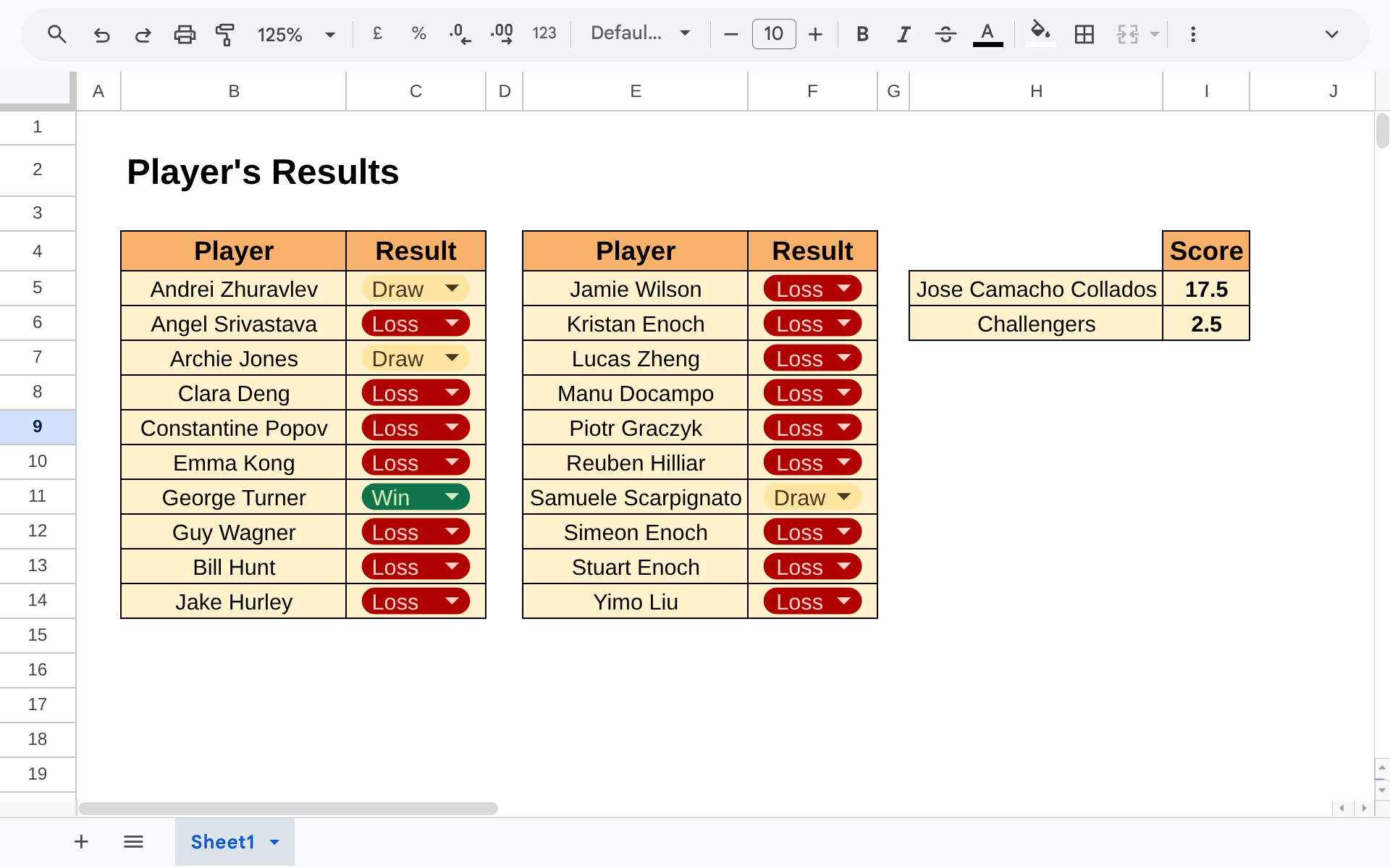
He scored 16 Wins, 3 Draws, 1 Loss. That’s 17.5-2.5.
2024: 19.5-3.5 (84.8%)
2025: 19-4 (82.6%)
2026: 17.5-2.5 (87.5%)
So this year was his best scoring event!
Congratulations to George Turner for being the only winner!
Congratulations to Andrei Zhuravlev, Archie Jones and Samuele Scarpignato for holding the master to a draw.
Thanks to everyone who participated, hope to see a lot of you again next year!
~~~
Before the event started, I mentioned that if anyone wanted to send me their games, I could take a look and show some interesting positions. A few did send me their games, so let’s have a look. Keep in mind that Jose is playing white in all of these games.
First Game
First up we have Jake Hurley (1963). Many will know Jake for his Tal-like aggression and tricky openings. If you don’t know his openings, you are in for a difficult time! I’m sure this is what Jake was hoping for against Jose.
Jose managed to avoid the tricky positions that could arise from Jake’s openings and transposed the position into some kind of Petrov. After a few more moves, we get to the following position.
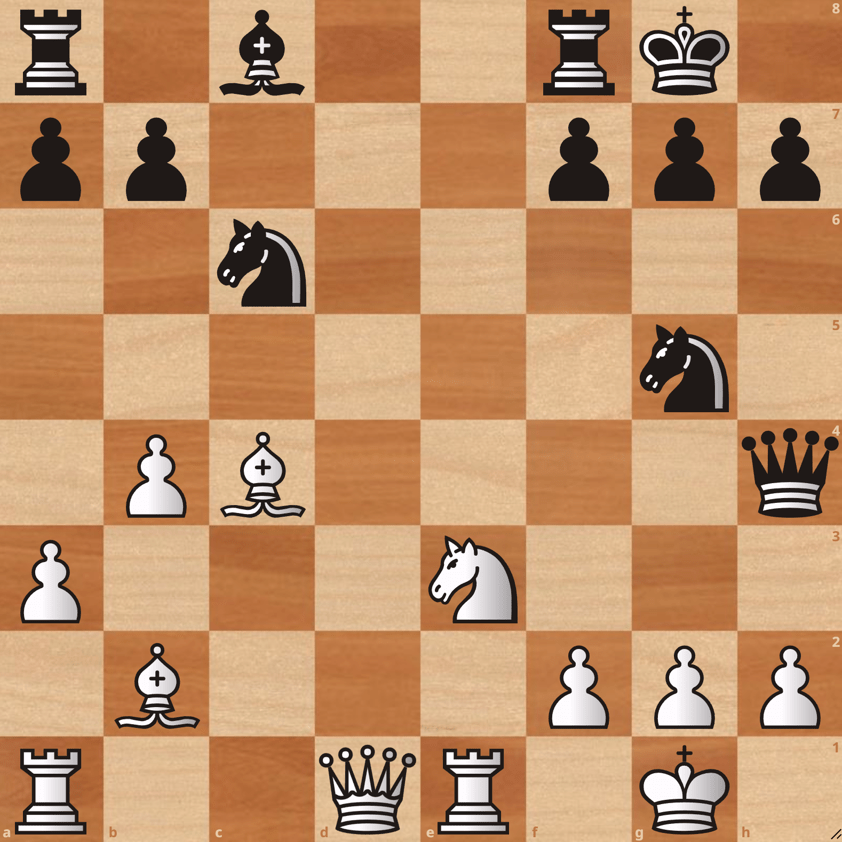
We have a relatively equal middlegame with a slight edge to White due to the nice Bishop pair and space edge on the queenside. Jake’s plan was to swap off one Bishop and bring more pieces to the kingside.
…Be6
Bxe6 fxe6
Qe2
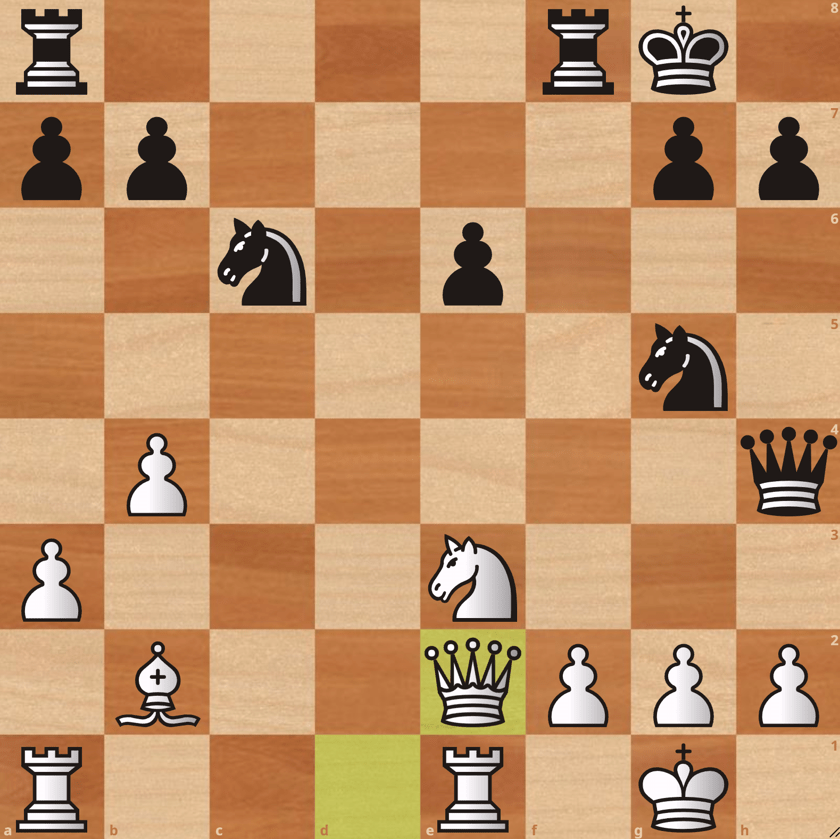
Here Jake wanted to play e5-e4-Nf3+, but doing so immediately would allow Qc4+ trading Queens, leaving Jake with a worse endgame.
As a result, he played …Rf7, both preparing to double up the Rooks and block the check.
Rf1 e5
Qg4 Qh6
h4 Ne6
Nf5
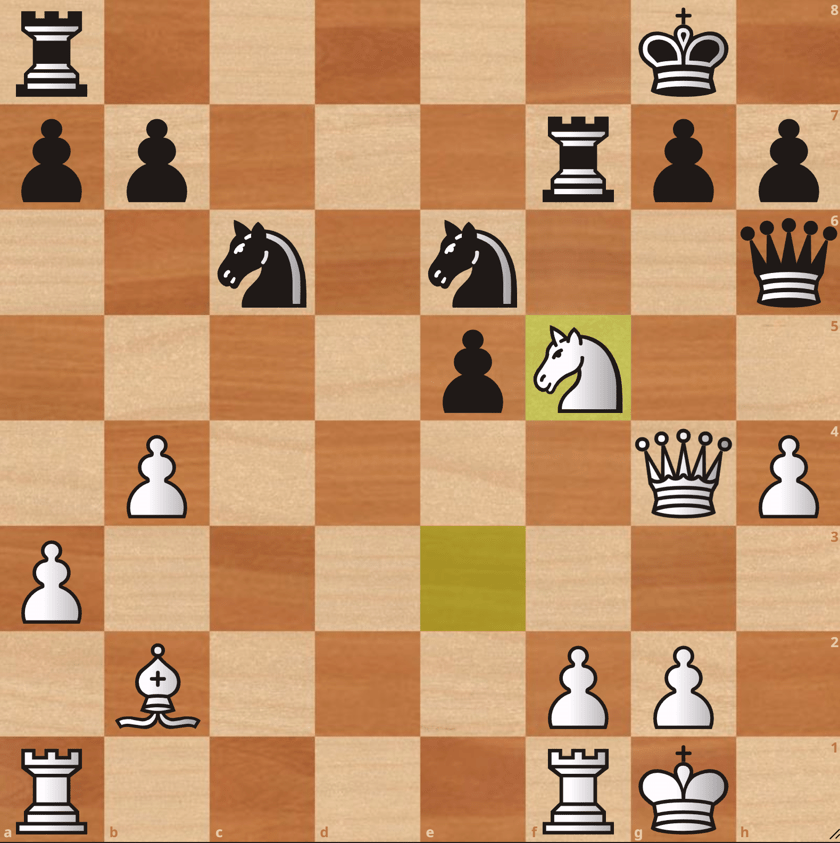
Jose has so far successfully stopped Black’s attack from picking up steam. Jake is most comfortable when he has the initiative and is attacking, and decided to complicate further with …Rxf5?
On the surface it has some merit: it removes a defender from the attack and gains a tempo or two on the White Queen. However, Jose played correctly to shut down the counterplay and just be an exchange up.
Qxf5 Rf8
Qh3 Nf4 (…Rf4 was the original plan but Bc1 refutes that).
Qg4
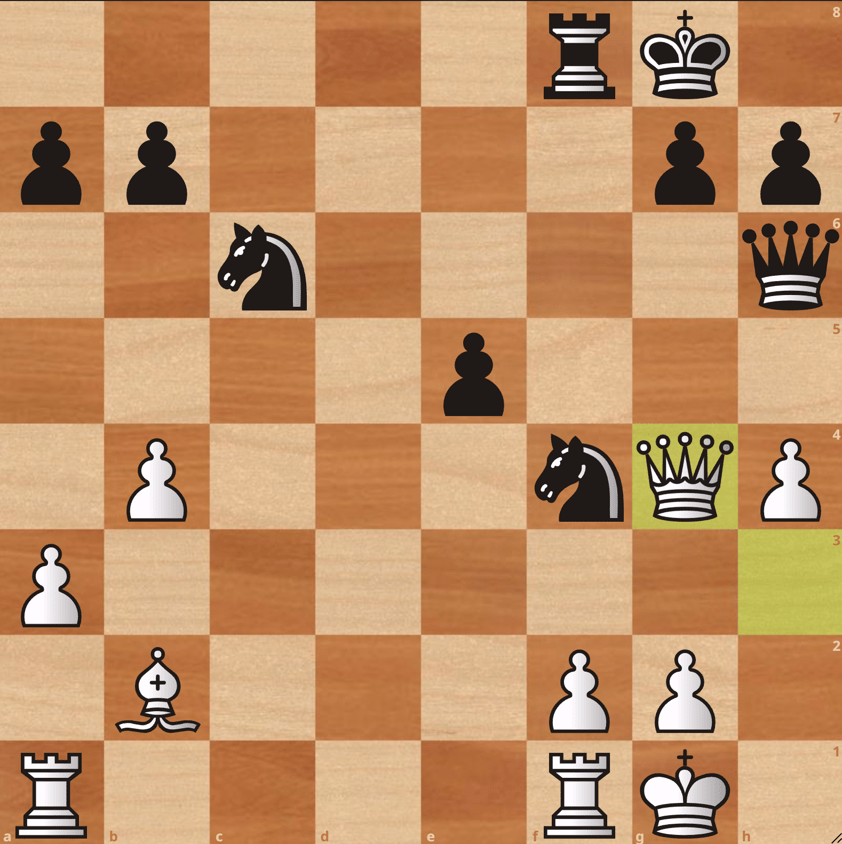
Jose keeps both the h4 pawn and e2 square defended, keeping everything under control. Later, after a trade of minor pieces, Jose sacrificed back the exchange but crucially won a pawn while doing so, leading to a clean pawn-up endgame. Jose went on to win this game.
From what I could see as a spectator, there were a few boards where Jose was spending a lot of his time. This was one of them…
Second Game
The second game sent to me was from the only winner, George Turner (1929). Interestingly, Jose mentioned to me after that he didn’t know George and asked what his grade was. He wasn’t surprised to hear it was in the 1900s. I think he had slowly guessed that as the game went on.
The game started as an English opening. After about 15 moves of both sides slowly improving pieces, Jose found himself in a position that Stockfish gives as +1.5. There were no mistakes, just a slow buildup of advantage.
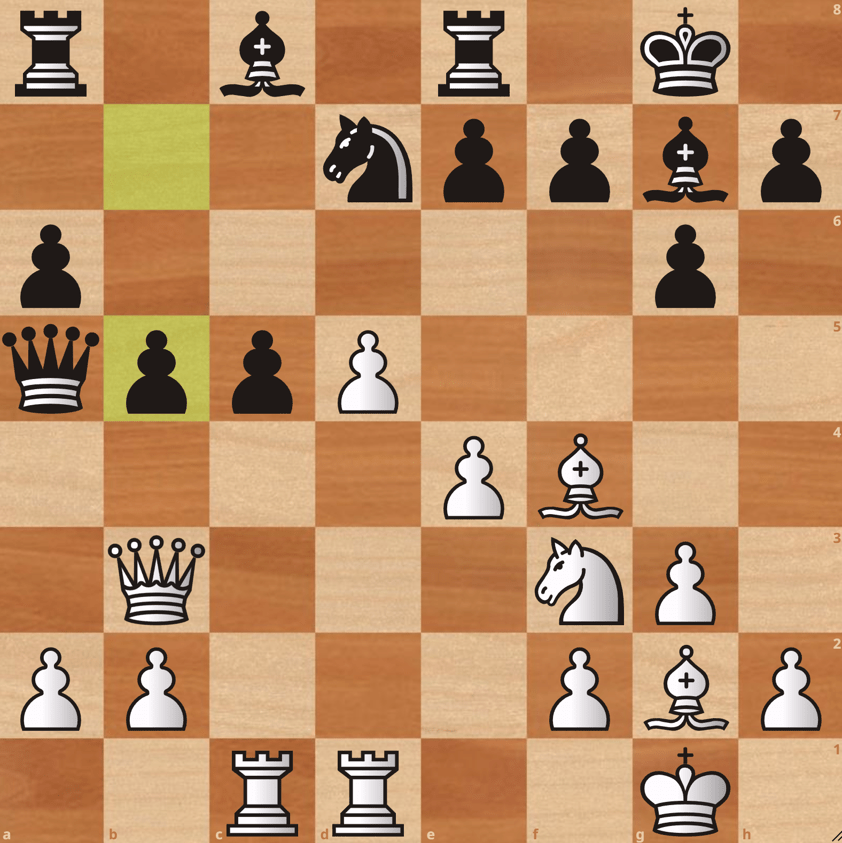
White has an excellent centre with nicely developed pieces. Black has some counterplay on the queenside. It’s somewhat of an art to know when it is right to push your centre to press your advantage, or when that simply becomes overpushing… After all, if you push your centre and it becomes undermined, you’ve lost control of the position.
What would you do here? Press your center with e5 or keep the structure as is?
Click here for solution
In this case, the best move is to play e5! Black is far enough behind in development and the push is stable enough for it to be worth it! Black can counterplay on the queenside, but you will move your Queen elsewhere to help the central push.
Ultimately, White wants to smash into Black’s pawns with e6!, causing lots of problems for Black’s King. If Black ever plays …e6, then d6 will create an incredible passed pawn. Any attempt to undermine with …f6 will weaken the King greatly.
Ultimately, Jose chose to keep the centre as it was. He played h4?! An interesting move that makes sense. The h-pawn seems healthy on h5 or h6. The problem is that this gives George a chance to gain some important tempi to help develop.
…c4
Qc2 Nc4
e5
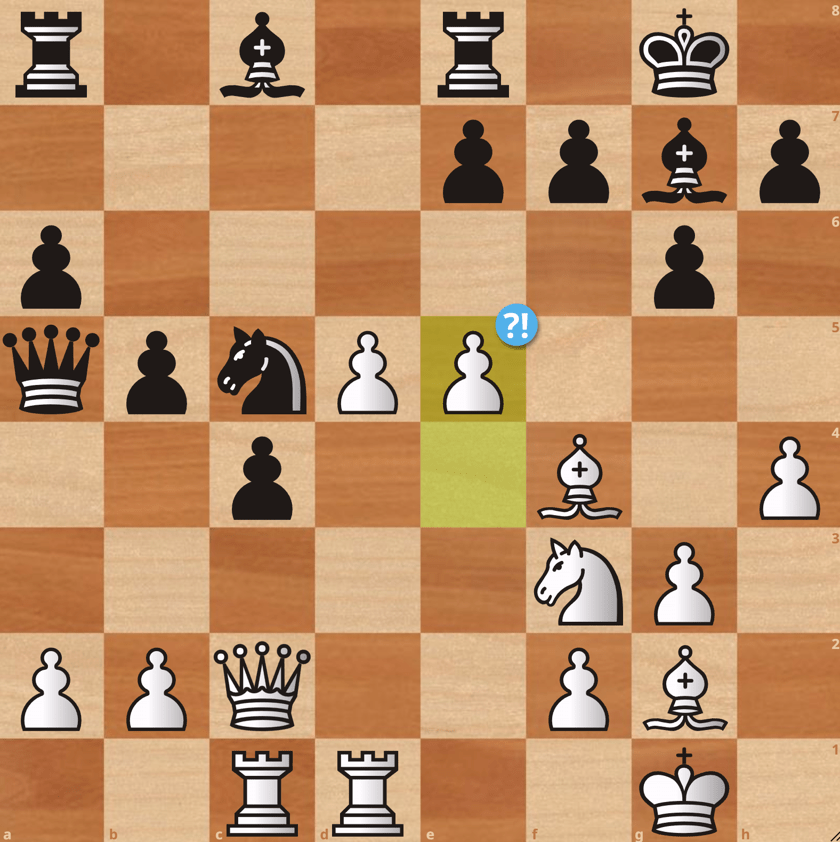
Now Jose chose to play e5, but it is not as good anymore. George is more developed, his Knight is out, and his c8 Bishop can now breathe. There is a much better argument here that the central push could be undermined. The position is roughly equal. Jose had chosen h4 earlier; he should have stuck with that plan, played h5 and seen where things went from there.
The game continued into a complex mess. George’s Knight made it to a fantastic outpost on c4 and Jose correctly sacced his Rook to remove that issue. Jose was down an exchange but had some counterplay in the form of strong pawns and the Bishop pair. The game continued as a battle of George trying to trade Queens and Jose avoiding this.
One interesting position that put a smile on my face was the following.
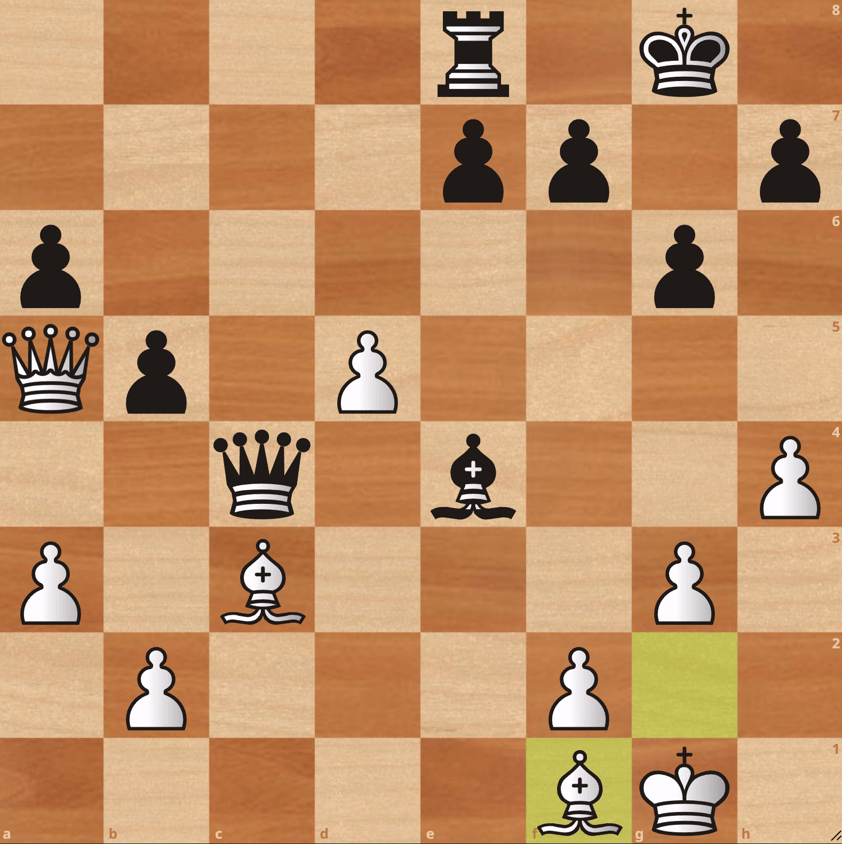
Jose understandably avoided a Queen trade by playing Qa5. George responded with Be4, looking for more trades, then Bf1, attacking Black’s Queen. George played the very natural Qxd5. This is indeed a good move, but Black had an even better move.
Click here for solution
Qc8! This move shows excellent full-board perception. With the Bishop no longer on g2, some instincts might be kicking in that the White King may be in mating territory. Qc8 is the quickest way to try and get the Queen to the f3 square.
White will have to get the Queen to the e3 square, ready to trade the Queens, which Black wants to do anyway. Note that White is able to get there quickly enough thanks to a fortuitous mate threat of his own: …Qc8 Qb4 Qf5 Qd4 (threatens mate) f6 Qe3. White can also try some other ways to stop Black, such as Be2, but eventually that d-pawn will go and Black will force some more trades.
These ideas don’t quite work with George’s move …Qxd5, as White will take the a-pawn and conveniently play Qxb5, attempting trades. The trades are still good for Black, but White did get some passed pawns out of it.
The endgame continued with some complex fights, but George seemed to be in the driver’s seat. We finally get to Jose’s last move:
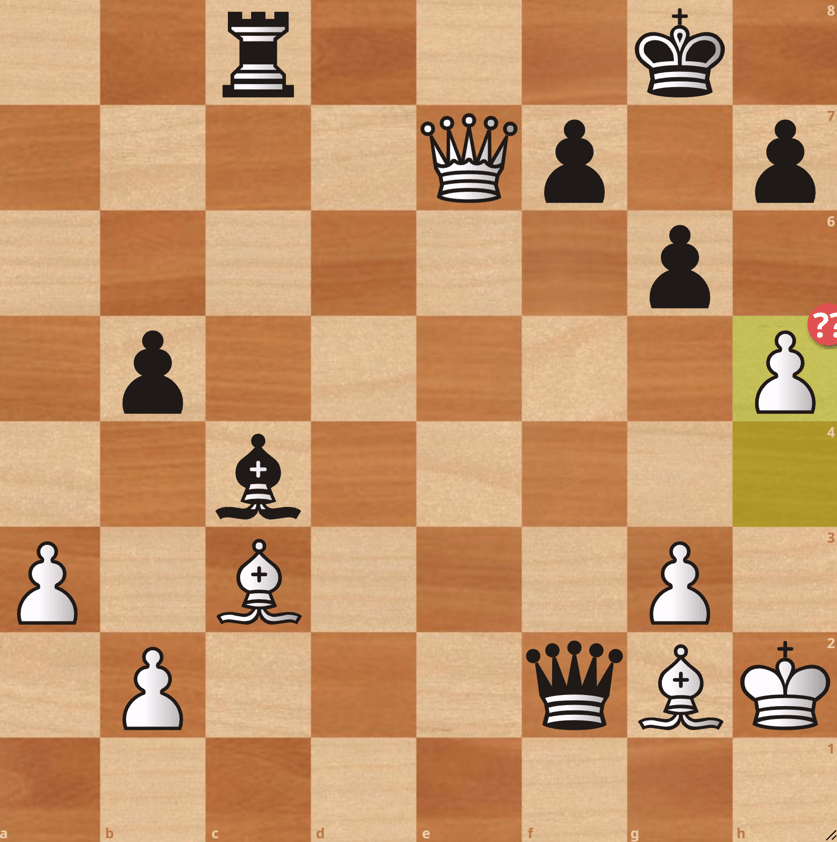
And George played Bd5, leading to Jose’s resignation. I was watching when it happened. I wasn’t sure if I was misreading the position, but Jose’s tut confirmed it. Slightly anticlimactic, but when you are constantly pressuring your opponent, mistakes are more likely. A very good result from George.
Third Game
The final game I’ll look at is from Sam Scarpignato (1727).
The game began with another English Opening, and like with George’s game, Jose managed to creep up an advantage.
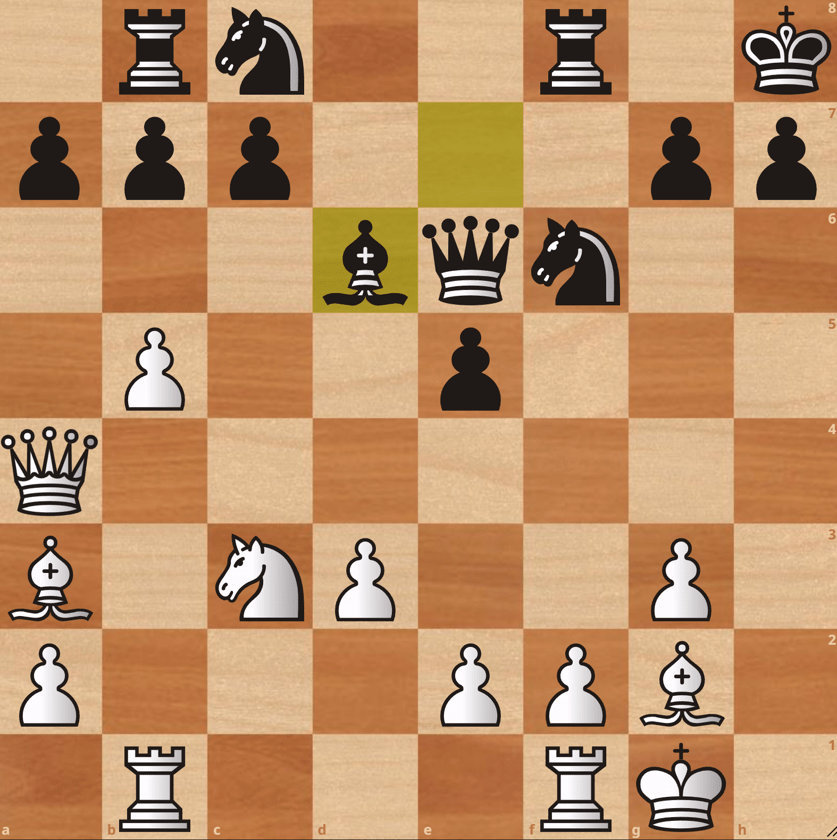
White’s pieces are a bit better overall and Black has an isolated pawn. Jose, however, made a big mistake here. He played the natural Ne4, hoping for some trades and a nice Bishop blockading the IQP, with possible plans of Kg2-Rh1 and pressure on h7.
What Jose probably missed though is after
Ne4 Nxe4
Bxe4 Qxa2!
That a3 Bishop is pinned and the e-pawn is falling. Black is getting a lot of material for this!
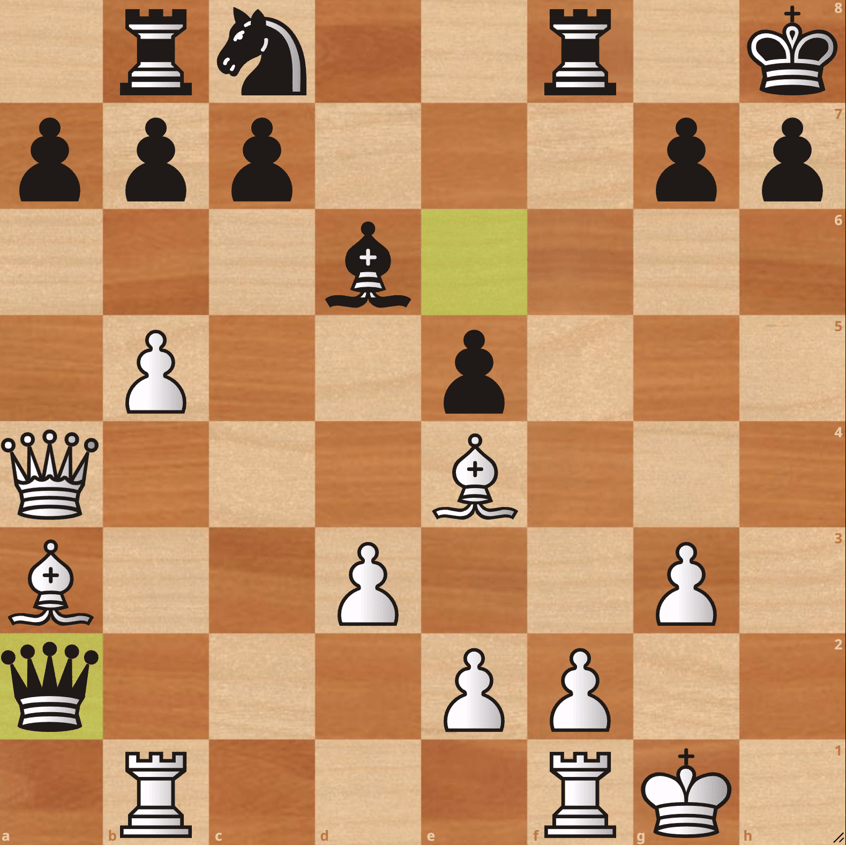
White played Ra1 and accepted the loss of two pawns. The position isn’t terrible. Black’s b-Rook is a bit funny and Black still has an IQP. But Sam is definitely the one calling the shots here.
Interestingly, Ra1 looks like the only move to not lose a Piece, but White could go for heavy imbalance and play Bxd6!? Ultimately trading a Queen for a Bishop and Rook. The computer slightly prefers Black, but I would certainly be having a lot of fun as White here.
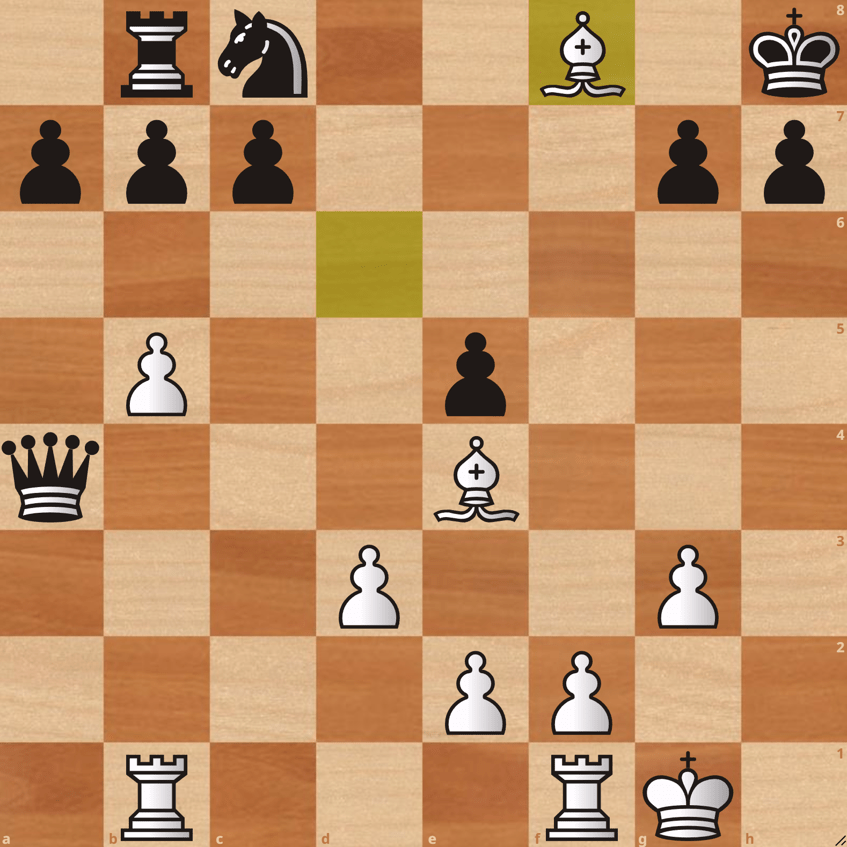
The game continued with Sam up 2 pawns in a complex position. The players traded minor pieces, where Jose was able to regain one more pawn before a Queen trade left us with a double Rook endgame.
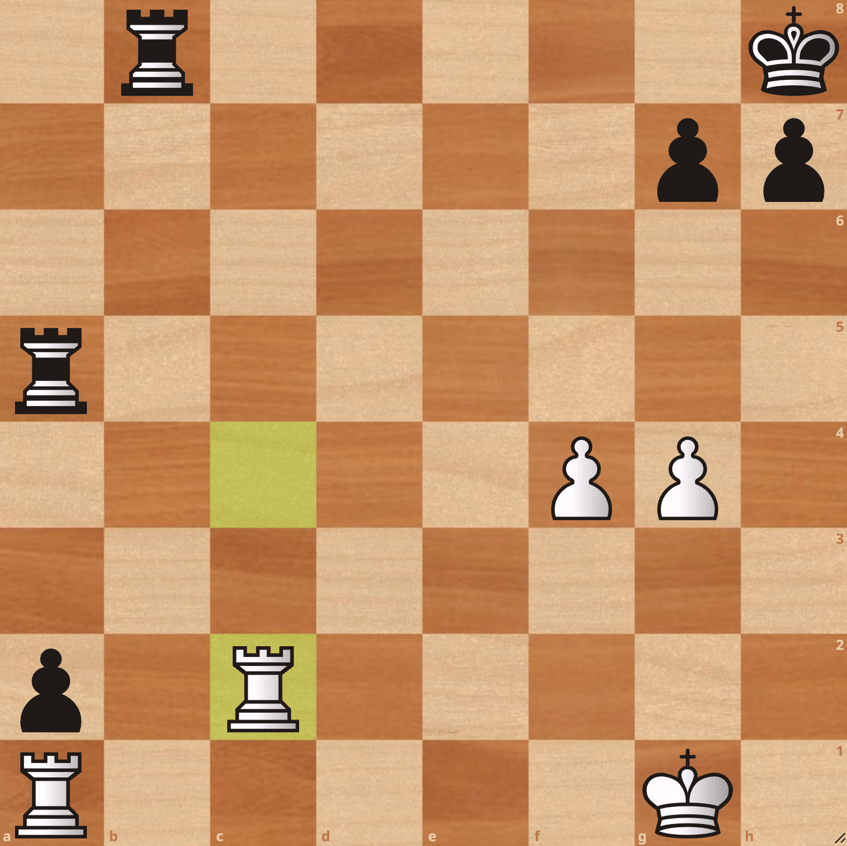
Sam was one of two games remaining, so he didn’t have too much time to think before Jose came back from the other board. They say all Rook endgames are drawn, but this position disproves that. Black is actually winning with precise play. What is Black’s only move?
Click here for solution
…Rba8! It’s tempting to play Rb1+, as it looks winning. White cannot play Rc1 because of …Rxc1 Rxc1 and then promotion. The promotion pins the Rook, so there is no clever back-rank mate for White. However, White can move the King to the second rank, and now the a-pawn is doomed. You don’t have time to take the a1 Rook because of White’s aforementioned back-rank mate threat. This would lead to a draw.
Rba8 at least defends the pawn, but some technique is still needed to win. The simplest way is to play …Rba8 Kf2 Ra3, cutting the King off. Black can then play Kg8 or push one of the pawns to avoid the mate threat. White will have to defend the f- and g-pawns, allowing Black to bring the other Rook to a4, at which point the Black King can come in to help. (see next diagram)
White could try to be more dynamic and let the pawns go, but any checks will help the Black King join the endgame. Any attempt to take Black’s pawns will be met with an eventual Rook on the b-file followed by Rb1, promoting the pawn.
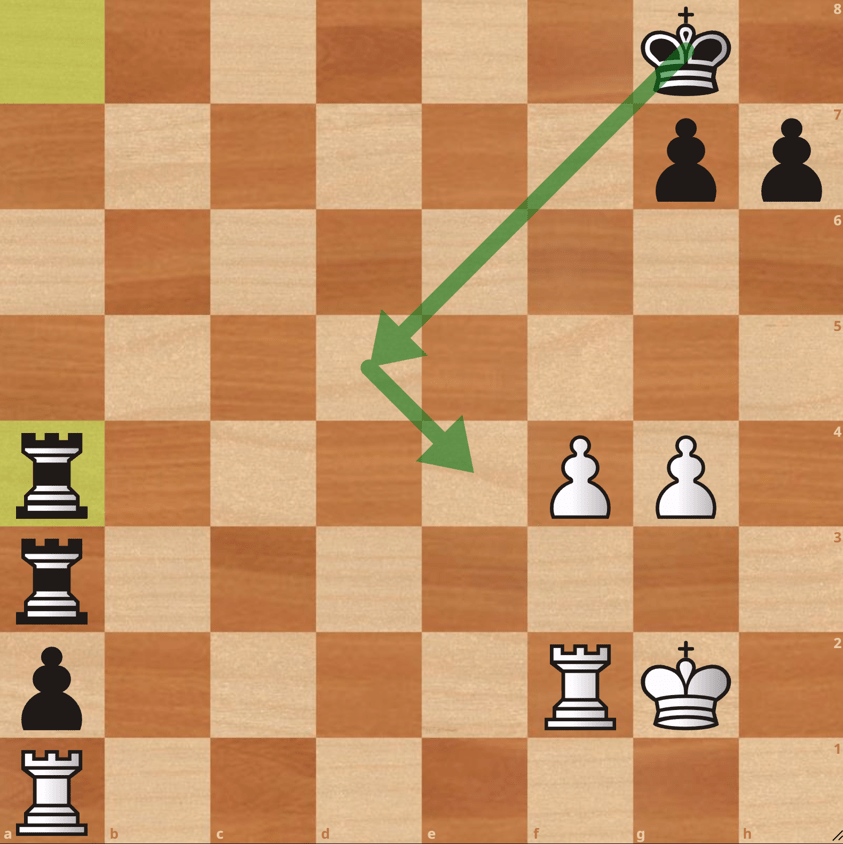
Sam ended up playing Rb1+ which lead to a draw.
Overall, another fun simul. Jose seemed to enjoy himself. When a game finished, he often started engaging with his opponent, talking about the game before being rushed along to carry on. The challengers had a great opportunity to play the best player in Wales, and I hope they took something away from it.
I look forward to another event next year!
 Cardiff Chess Club